Why Galvanized Steel Conduits Are Preferred for Industrial Electrical Wiring
By Adil, Managing Director at AMN Engineering · · 6 min read
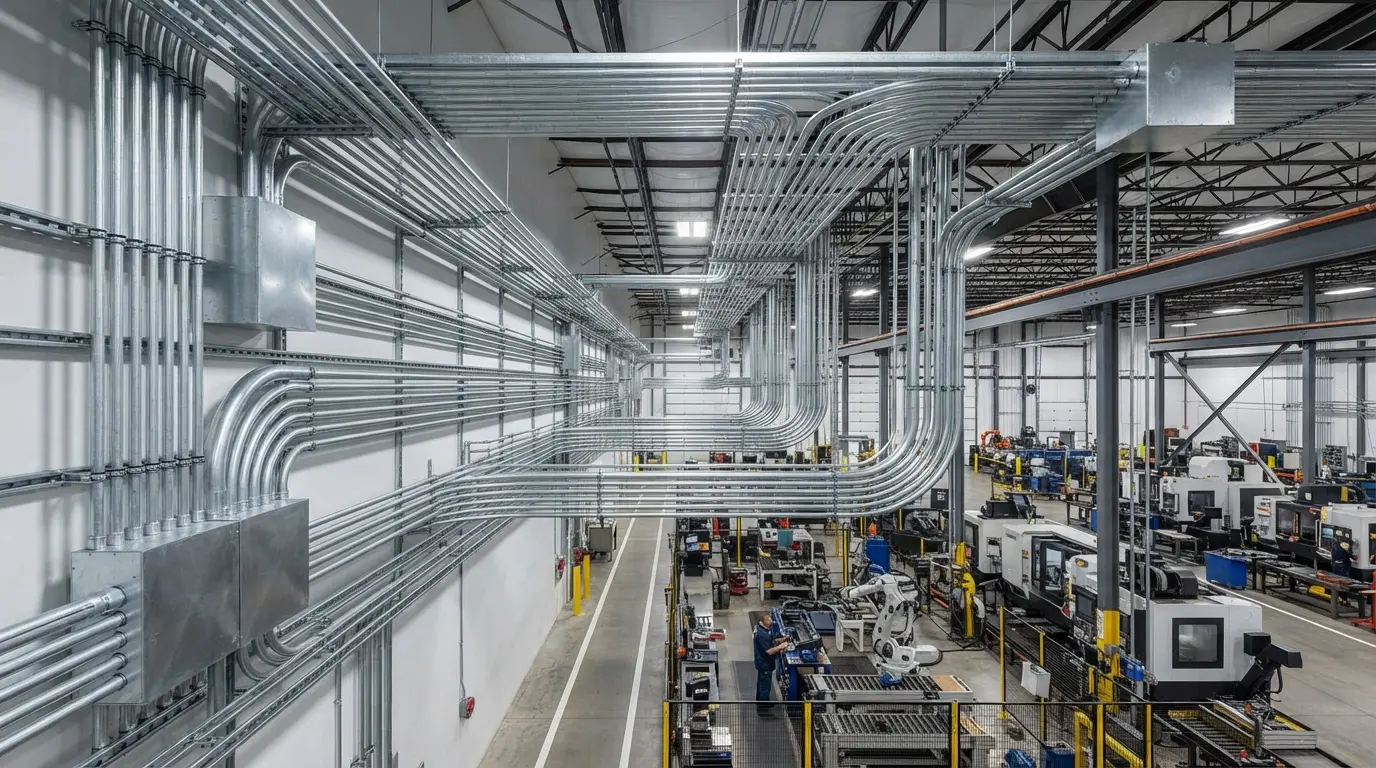
Walk into any factory, processing plant, or industrial facility and look at the electrical installation. The conduit is almost certainly galvanized steel (GI). Not PVC. Not aluminum. Steel.
There is a reason for this. Industrial environments are harsh. Cables need protection from physical damage, heat, chemicals, and even explosions. Galvanized steel conduit provides protection that no other conduit material can match.
This guide explains the seven specific reasons why GI conduits are the standard for industrial electrical wiring, and why engineers and specifiers keep choosing them over cheaper alternatives.
Why Not Just Use PVC?
PVC conduit is cheaper and lighter. So why not use it everywhere?
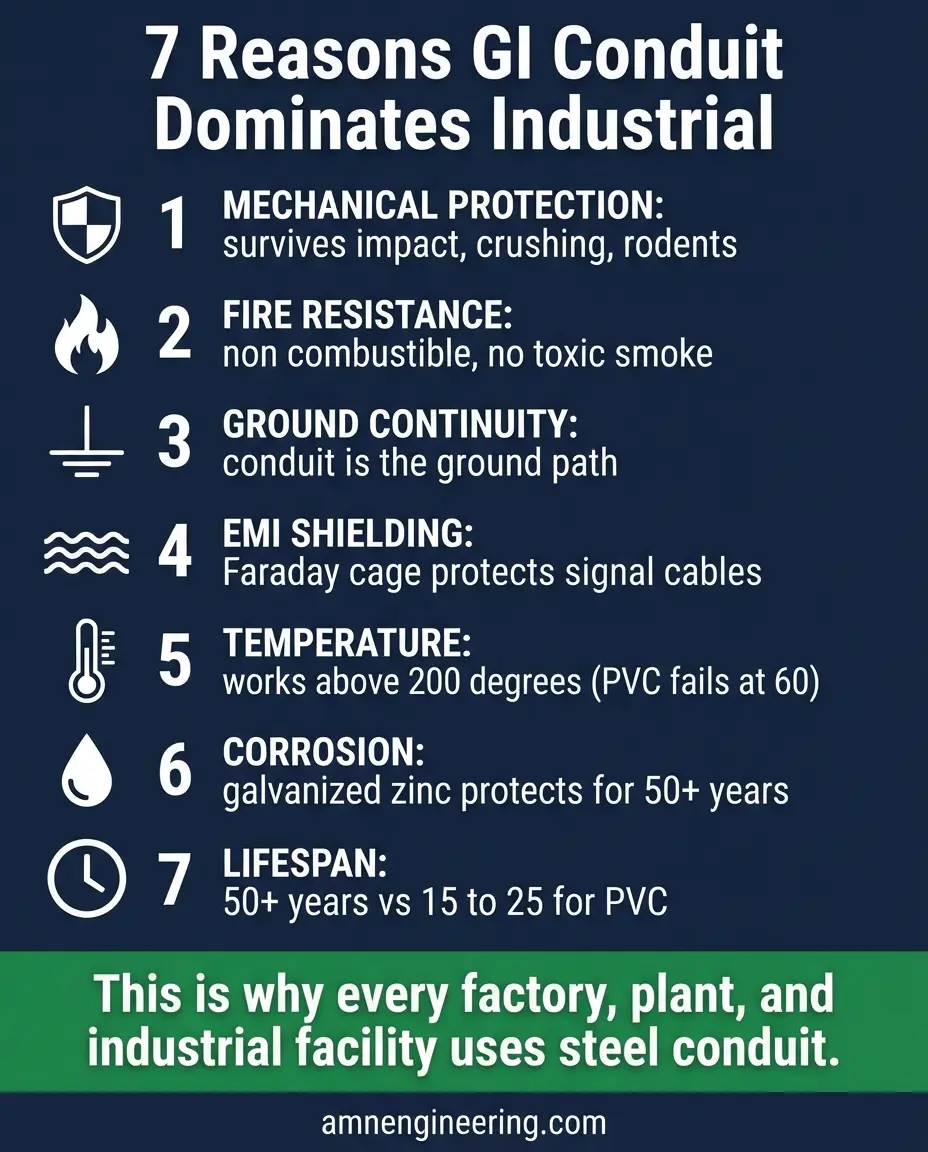
Because PVC fails in the conditions that matter most in industrial environments: high temperature, physical impact, fire, and electromagnetic interference. In a factory where a forklift can hit the conduit, where ambient temperatures reach 50+ degrees, where fire resistance is critical, and where heavy machinery generates electrical noise, PVC is simply not adequate.
7 Reasons GI Conduits Dominate Industrial Installations
1. Mechanical Protection
Steel conduit protects cables from physical damage: impact from moving equipment, crushing from heavy objects, vibration from machinery, and rodent attack. A forklift hitting a PVC conduit run shatters it and exposes the cables. The same impact on a GI conduit dents it but the cables inside remain protected.
2. Fire Resistance
GI conduit does not burn. It does not produce toxic smoke. It does not melt and drip burning material. In a fire, steel conduit maintains its structural integrity, keeping cables contained and reducing fire spread through cable routes. PVC melts at around 100 degrees Celsius and releases toxic hydrogen chloride gas when burned. In an industrial fire, this is a serious hazard.
3. Ground Continuity
Steel conduit provides a continuous metallic path for grounding (earthing). When properly installed with metal fittings (locknuts, bushes, couplings), the conduit system itself serves as an equipment grounding conductor. This provides an additional layer of electrical safety beyond the ground wire inside the conduit.
4. EMI Shielding
Steel conduit acts as a Faraday cage around the cables, shielding them from electromagnetic interference (EMI) generated by motors, variable frequency drives (VFDs), and other industrial equipment. This is critical for: control cables, instrumentation wiring, data communication cables, and any signal cable that runs near power cables or motor drives. PVC provides zero EMI shielding.
5. Temperature Resistance
Galvanized steel conduit operates safely at temperatures far beyond what PVC can handle. Standard GI conduit works continuously at temperatures up to 200+ degrees Celsius. PVC softens at 60 degrees and fails at 100 degrees. In hot climates (like the GCC), rooftop installations, boiler rooms, and areas near ovens or furnaces, GI is the only viable option.
6. Chemical Resistance
The galvanized zinc coating protects the steel from corrosion in most industrial atmospheres including: mild chemical fumes, humidity, condensation, and general industrial pollution. For severe chemical environments, stainless steel conduit or PVC coated steel conduit is used.
7. Long Service Life
Class 4 galvanized conduit lasts 50+ years in industrial environments per ISO 1461 coating standards. PVC conduit degrades from UV exposure (if outdoors), becomes brittle with age, and may need replacement within 15 to 25 years. Over a building's lifetime, GI conduit is actually cheaper when you consider replacement costs.
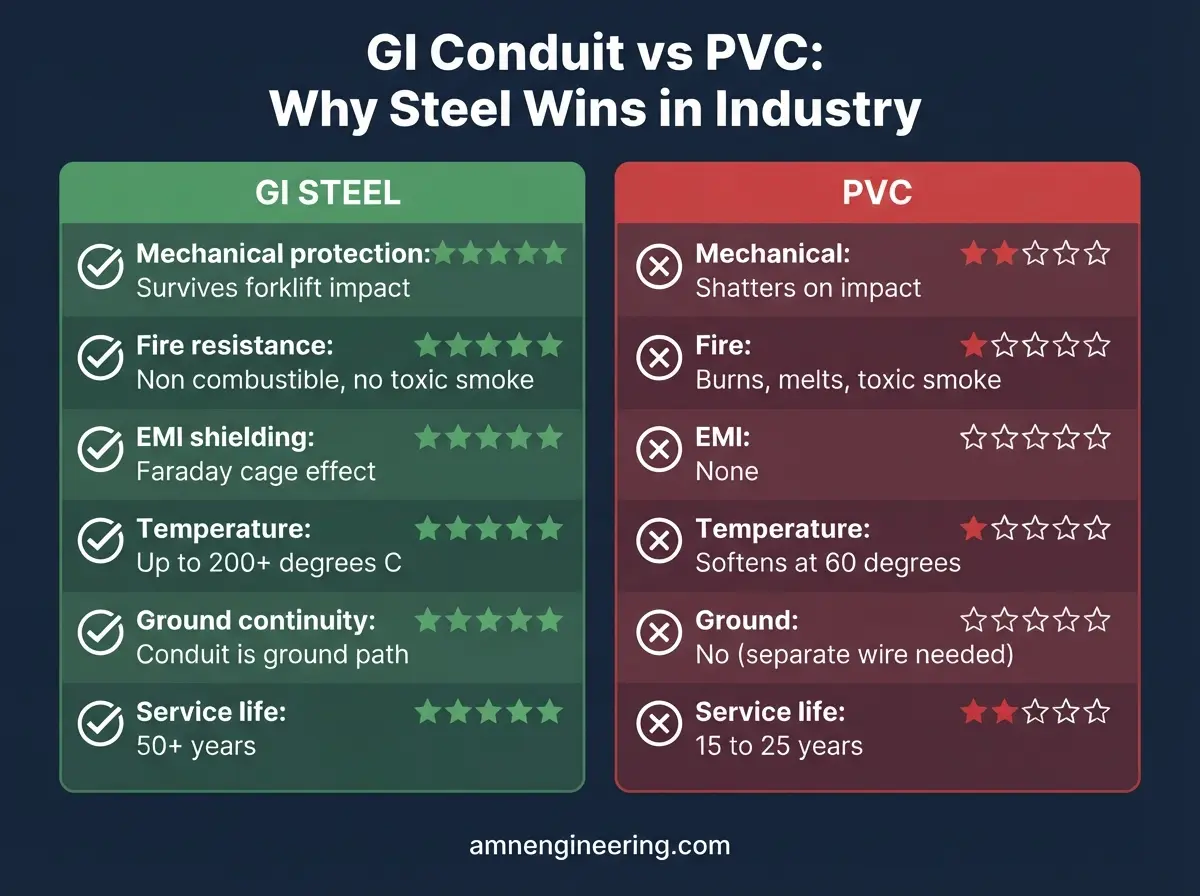
GI Conduit vs PVC Conduit: The Comparison
| Factor | GI (Galvanized Steel) Conduit | PVC Conduit |
|---|---|---|
| Mechanical Protection | Excellent (survives impact) | Poor (shatters on impact) |
| Fire Resistance | Non combustible | Burns, melts, toxic smoke |
| Temperature Range | Up to 200+ degrees C | Softens at 60 degrees C |
| EMI Shielding | Excellent (Faraday cage) | None |
| Ground Continuity | Yes (conduit is ground path) | No (separate ground wire needed) |
| Chemical Resistance | Good (zinc coating) | Excellent (inherent) |
| UV Resistance | Excellent | Degrades over time |
| Weight | Heavier | Lighter |
| Installation Cost | Higher (heavier, threading) | Lower (lighter, glue joints) |
| Material Cost | Higher | Lower |
| Service Life | 50+ years | 15 to 25 years |
| Best For | Industrial, outdoor, hazardous | Indoor residential, light commercial |
Where GI Conduit Is Required by Code
Required in These Locations
- Hazardous (classified) areas per NEC Article 500 or IEC 60079
- Exposed runs in industrial plants (factory floors, warehouses)
- Areas subject to physical damage (parking structures, loading docks)
- Wet or damp locations (basements, tunnels, outdoor)
- Fire rated compartments and cable routes
- Healthcare facilities (in many jurisdictions)
- Data centers (EMI protection for data cables)
Where PVC Is Acceptable
- Embedded in concrete (non exposed)
- Inside walls of residential buildings (concealed)
- Underground (direct buried PVC rated for burial)
- Indoor dry locations in light commercial buildings (where code allows)
When in doubt, check your local electrical code (BS 7671, NEC, or local regulations). In most industrial applications, the code either requires or strongly recommends steel conduit. For a deeper look at steel conduit types, see our guide on rigid steel conduit vs EMT vs IMC.
Frequently Asked Questions
Steel conduit provides mechanical protection (survives forklift impact), fire resistance (does not burn or produce toxic smoke), EMI shielding (protects signal cables), ground continuity, and temperature resistance. PVC fails in all of these areas.
Material and installation cost are higher. But service life is 50+ years vs 15 to 25 years for PVC. On a lifecycle cost basis, GI is often cheaper. Add the safety benefits and there is no comparison for industrial applications.
Yes. When properly installed with metal fittings, the steel conduit system provides a continuous ground path. This is an additional safety feature that PVC cannot provide.
Yes. Class 4 galvanized conduit is designed for outdoor, damp, and corrosive environments with a coating that lasts 50+ years.