Contract Manufacturing in Pakistan: What International Buyers Need to Know (2026 Guide)
By Adil, Managing Director at AMN Engineering · · 15 min read

Contract manufacturing in Pakistan is one of the best-kept secrets in global sourcing. While most procurement managers default to China or India, Pakistani manufacturers offer lower costs, no minimum order quantities, and faster shipping to the Middle East. They've been doing so quietly for decades.
This guide covers everything an international buyer needs to know before placing their first order with a Pakistani contract manufacturer: what's available, what it costs, how quality is managed, and the step-by-step process from sending a drawing to receiving finished parts at your door.
I've run a contract manufacturing company in Lahore since 1999. We serve clients across the GCC, Europe, and the USA, including names like KSB Pumps, PepsiCo, and Smooth Solutions (Dubai). What follows is based on 25+ years of experience, not theory.
Contract manufacturing in Pakistan lets overseas buyers outsource custom metal parts to factories that build from your drawings and specifications. Compared with China or India, Pakistani manufacturers often offer lower costs, no minimum order quantities, and faster shipping to the Middle East. It suits prototypes and small-to-medium batches, with quality verified through documentation, third-party inspection, and small trial orders before you scale up.
AMN Engineering is a Lahore based contract manufacturer, operating since 1999, offering CNC machining, fabrication, forging, casting, galvanizing and more under one roof, serving buyers in the US, UK, Gulf, and worldwide.
What Is Contract Manufacturing?
Contract manufacturing means outsourcing the production of parts or components to an external factory. You provide the drawings, specifications, and requirements. The manufacturer produces the parts to your exact design. You retain full ownership of the design. The manufacturer is a service provider, not a product company.
This is different from buying off-the-shelf components. In contract manufacturing, every part is custom: made to your drawing, your material specification, and your tolerances.
How It Works in Practice
The typical contract manufacturing process looks like this:
- You send a drawing (DXF, STEP, IGES, PDF, or even a hand sketch with dimensions)
- The manufacturer quotes with unit price, lead time, material, and process details
- You approve and place the order, usually with an advance payment
- Manufacturing begins with progress updates and photos during production
- Quality inspection: dimensional checks, material test certificates, optional third-party inspection
- Shipping: packed, documented, and dispatched to your location
- You receive finished parts, ready to assemble, install, or sell
The entire cycle from drawing to delivery can take as little as 2–4 weeks for standard parts, depending on complexity and destination.
Why Pakistan? The Case for Outsourcing to Pakistan
If you've never considered Pakistan for contract manufacturing, here's why you should:
Lower Costs Than China and India
Pakistan has some of the lowest manufacturing labor costs in Asia. According to the International Labour Organization, Pakistani manufacturing wages are significantly below Chinese levels, which have risen over 100% in the past decade. Raw materials are sourced from domestic steel producers like Amreli Steels and International Steels Limited, keeping material costs competitive.
For a detailed cost breakdown, see our comparison: Manufacturing in Pakistan vs. China vs. India.
Bottom line: For small-to-medium batches (1–5,000 pieces), Pakistani manufacturers typically quote 30–50% lower than Chinese suppliers. Total landed cost savings are even higher when you factor in shipping and lead time.
No Minimum Order Quantities
This is the single biggest advantage for buyers who need prototypes, spare parts, or small production runs. Most Chinese factories require 500–1,000+ pieces minimum. Indian manufacturers typically need 100–500 pieces.
Pakistani contract manufacturers, including AMN Engineering, accept orders as small as 1 piece for prototypes and 50+ pieces for production runs. The cost structure makes low-volume work profitable without inflating per-unit pricing.
Fastest Shipping to the GCC and Middle East
Pakistan sits on the Arabian Sea. Karachi port to Dubai is a 5–7 day sea voyage. Compare that to 15–20 days from China and 7–10 days from India. For buyers in the UAE, Saudi Arabia, Qatar, Bahrain, Kuwait, and Oman, this is a significant logistical advantage.
English-Speaking, WhatsApp-Friendly Communication
English is widely spoken in Pakistan's export manufacturing sector. Most factory owners and engineers communicate fluently in English. And unlike Chinese suppliers where communication goes through a trading company, Pakistani manufacturers deal with you directly, often via WhatsApp, which GCC procurement teams already use as their primary communication tool.
Natural Design Protection
Pakistani contract manufacturers don't sell their own products. They make parts to your drawings. With no product catalog, no brand, and no retail channel, there is no business incentive to copy your designs. This is a structural advantage that no NDA can replicate.
What Can Be Manufactured in Pakistan?
Pakistan has a mature metalworking industry with capabilities spanning the full range of manufacturing processes. Here's what's available:
Machining and Cutting
| Process | Capabilities | Typical Parts |
|---|---|---|
| CNC Turning | Shafts, bushings, pins up to 500mm diameter | Pump shafts, bearing housings, rollers |
| CNC Milling | Complex geometries, pockets, slots | Valve bodies, manifolds, custom brackets |
| Laser Cutting | Steel, stainless, aluminum up to 20mm thick | Panels, brackets, enclosures, signage |
| Grinding | Surface and cylindrical, ±0.005mm | Precision shafts, tooling components |
Forming and Shaping
| Process | Capabilities | Typical Parts |
|---|---|---|
| Forging | Open die and closed die, carbon and alloy steel | Flanges, connecting rods, heavy-duty shafts |
| Die Casting | Aluminum and zinc alloy, high volume | Housings, enclosures, decorative components |
| Stamping | Sheet metal, progressive and single-station | Washers, clips, brackets, electrical contacts |
| Metal Fabrication | Cutting, bending, welding, assembly | Frames, chassis, tanks, structural assemblies |
Finishing and Treatment
| Process | Capabilities | Typical Applications |
|---|---|---|
| Hot-Dip Galvanizing | Per ISO 1461 standards | Outdoor structures, conduits, poles, frames |
| Threading | BSP, metric, UNC, UNF standards | Pipes, fittings, fasteners, rods |
| Powder Coating | Various colors and textures | Enclosures, furniture, architectural panels |
| Electroplating | Zinc, nickel, chrome | Decorative and corrosion-resistant parts |
Specialized Products
| Product | Standards | Markets |
|---|---|---|
| Steel Conduits | BS 31, Class 3 and Class 4 | Electrical installations, construction |
| Conduit Fittings | BS 31 compatible | Locknuts, saddles, bushes, bends, elbows |
Common Materials Available in Pakistan
Pakistani manufacturers regularly work with: mild steel (MS), EN8, EN24, EN19, stainless steel 304 and 316, aluminum 6061 and 6082, brass, copper, and tool steels. Specialty materials can be imported with 1–2 weeks additional lead time.
Manufacturing Hubs: Where the Factories Are
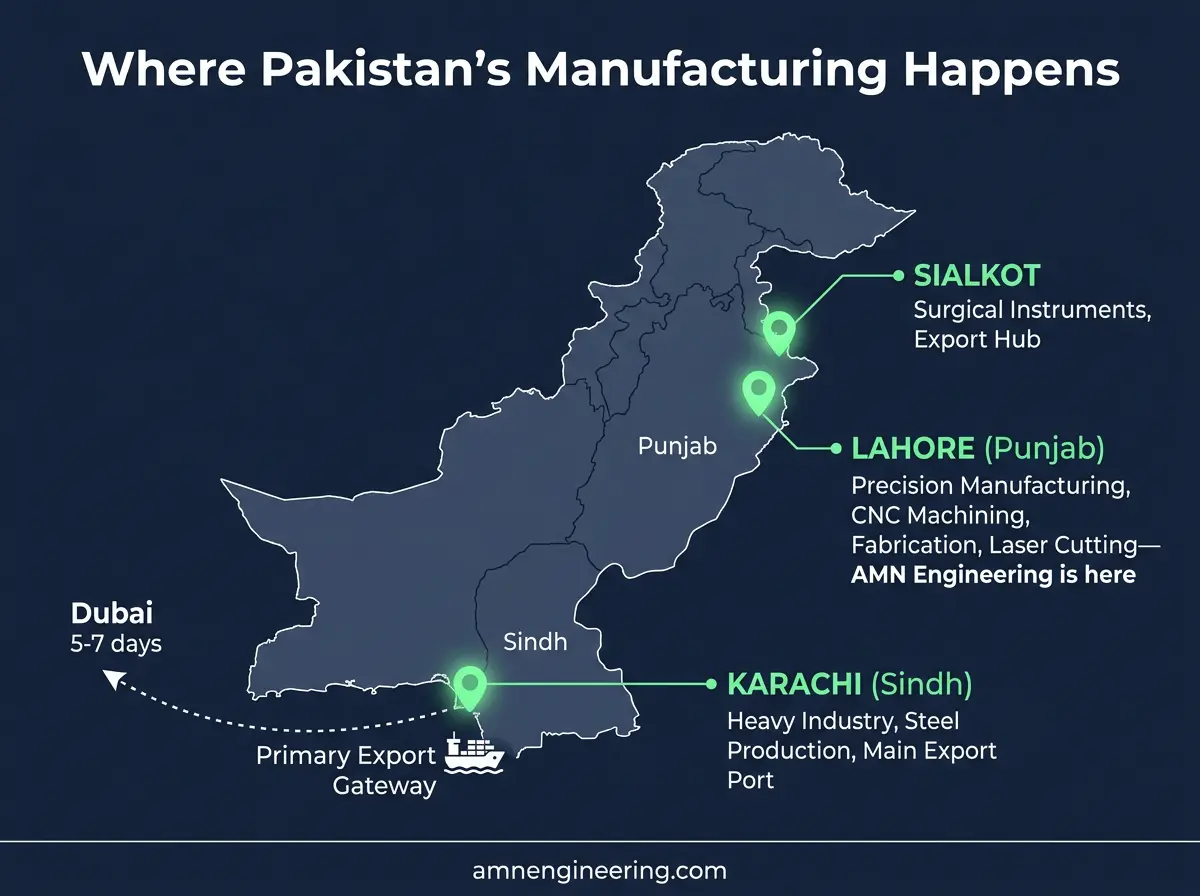
Pakistan's manufacturing is concentrated in three main industrial regions:
Lahore (Punjab)
The largest manufacturing hub in Pakistan. Lahore and surrounding areas (Sheikhupura, Gujranwala, Sialkot) have the highest concentration of engineering workshops, CNC facilities, and fabrication companies. AMN Engineering is based here. Lahore is particularly strong in general engineering, CNC machining, fabrication, and galvanizing.
Karachi (Sindh)
Pakistan's largest city and port city. Karachi is the center of heavy industry, steel production, and large-scale manufacturing. It's also where most exports ship from. Karachi's Port Qasim and Karachi Port are the primary export gateways.
Sialkot
Known globally for surgical instruments, sports goods, and precision manufacturing. Sialkot has the most developed export infrastructure in Pakistan, with its own international airport (built by the private sector) and a strong culture of quality manufacturing for international markets.
Quality: How to Verify Before You Commit
Quality is the number one concern for first-time buyers sourcing from Pakistan. Here's how to manage it:
Start Small, Always
Never place a large first order with any new supplier, regardless of country. Start with a trial order of 10–50 pieces. This lets you verify dimensional accuracy, surface finish, material quality, and packaging without significant financial risk.
Request Documentation
A reputable Pakistani manufacturer should provide:
- Material Test Certificates (MTCs): Chemical composition and mechanical properties of the raw material used
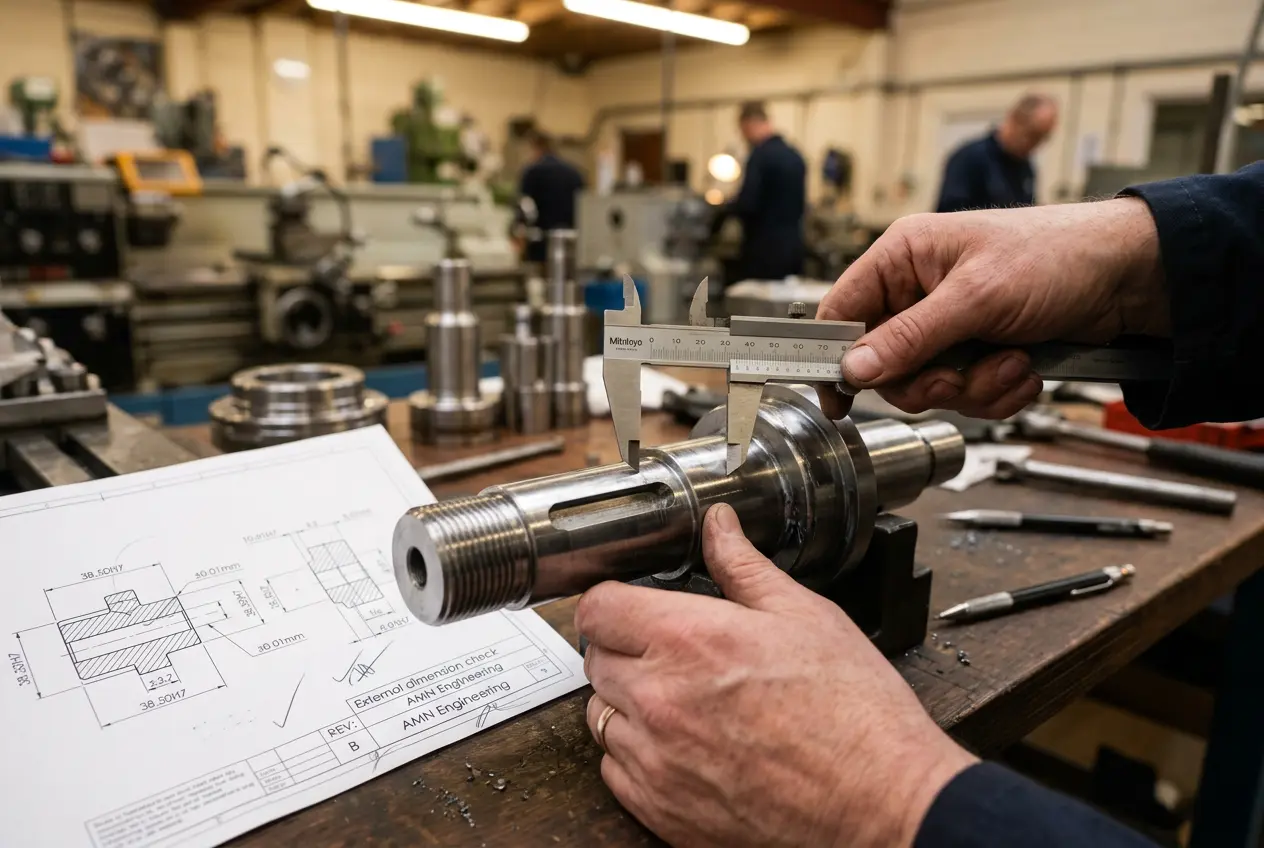
- Dimensional Inspection Reports: Measured values for critical dimensions, compared against your drawing tolerances
- Process Certificates: Galvanizing thickness reports, heat treatment records, welding procedure qualifications as applicable
Use Third-Party Inspection
All major international inspection companies operate in Pakistan:
- SGS Pakistan with offices in Lahore, Karachi, Islamabad
- Bureau Veritas Pakistan with offices in Lahore and Karachi
- TÜV, available through regional offices
You can arrange pre-shipment inspection where a third-party inspector visits the factory, checks your parts against drawings, and issues an independent inspection report. This typically costs $300–600 per visit and gives complete peace of mind for first orders.
Check for ISO Certification
While not every Pakistani manufacturer is ISO 9001 certified, the best export-oriented facilities are. Ask for a copy of the certificate and verify it through the issuing body.
Visit the Factory (or Request a Video Tour)
If you're placing orders above $10,000, consider visiting the factory. Pakistan offers visa-on-arrival for many nationalities, and Lahore has direct flights from Dubai, Doha, and Riyadh. If travel isn't practical, request a live video tour via WhatsApp. Any serious manufacturer will be happy to walk you through their facility.
How to Place Your First Order: Step by Step
Here's exactly what the process looks like when you work with a Pakistani contract manufacturer for the first time:
Step 1: Send Your Drawing and Requirements
Share your part drawing in any format: DXF, STEP, IGES, SolidWorks, PDF, or even a hand sketch with dimensions. Include:
- Material specification (e.g., EN8 steel, SS304, aluminum 6061)
- Quantity needed
- Tolerances for critical dimensions
- Surface finish requirements (if any)
- Any special requirements such as heat treatment, galvanizing, specific thread standards, etc.
You can send these via email or WhatsApp. Most Pakistani manufacturers prefer WhatsApp for speed.
Step 2: Receive a Quote (Within 24 Hours)
A good manufacturer will respond with a detailed quote that includes: unit price, total price, material to be used, manufacturing process, lead time, and any applicable tooling costs. If the quote isn't detailed, that's a red flag.
Step 3: Approve and Pay Advance
Standard terms for new clients are 50% advance, 50% before shipping. Payment is typically via wire transfer (TT). Once the advance is received, manufacturing begins.
Step 4: Manufacturing (With Progress Updates)
Expect regular updates: photos of raw material, in-process shots, and finished parts before packing. At AMN Engineering, we send WhatsApp updates at every stage without being asked.
Step 5: Inspection and Documentation
Before shipping, your parts are inspected and documentation is prepared: material test certificates, dimensional reports, packing lists, and commercial invoices. If you've arranged third-party inspection, it happens at this stage.
Step 6: Shipping and Delivery
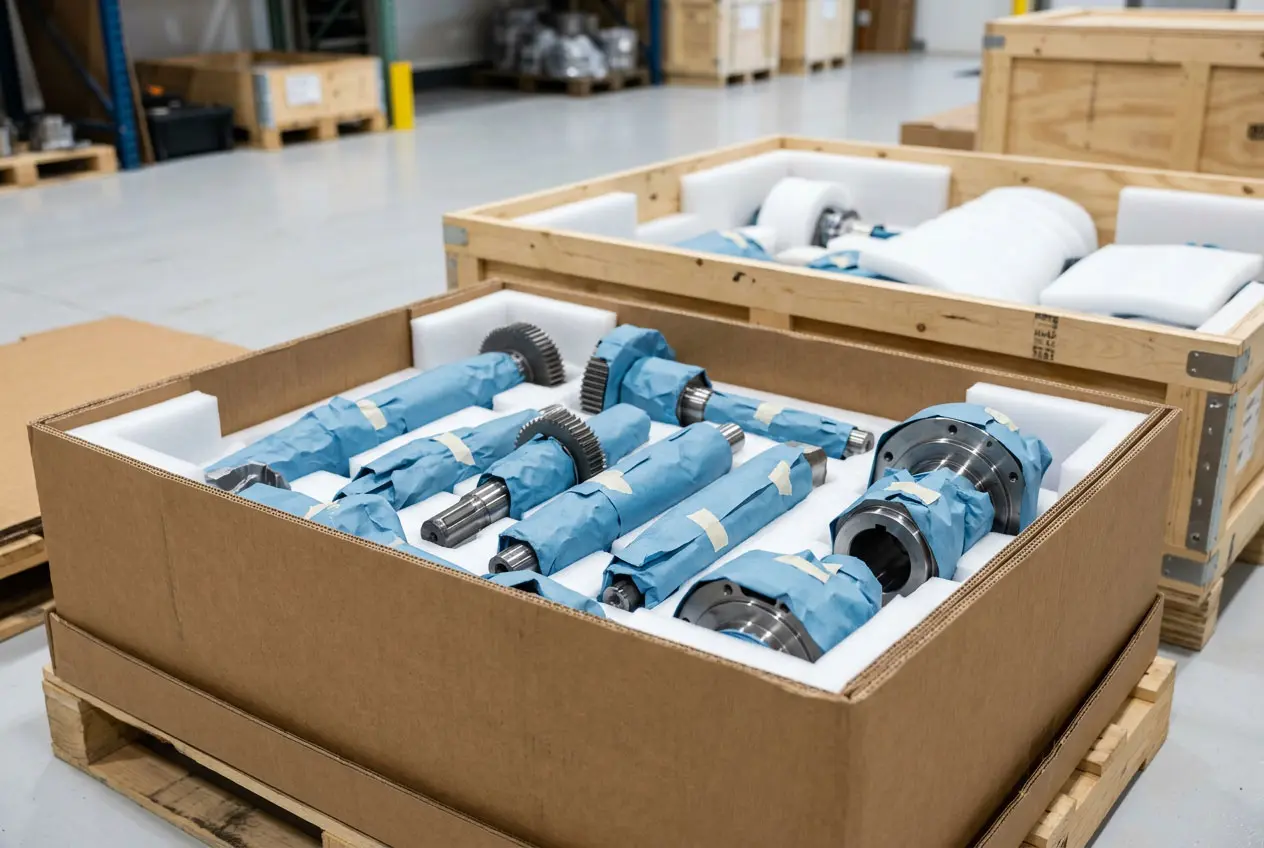
Parts are packed for export (typically wooden crates for heavy parts, carton boxes for lighter components), and shipped via your preferred method. Most GCC orders go by sea freight (5–10 days) or air freight (1–3 days for urgent orders).
Step 7: Receive, Verify, Reorder
Inspect the parts when received. If everything meets your requirements (and with a reputable manufacturer it will), you now have a reliable supply chain at 30 to 50% lower cost than your previous source.
Shipping and Logistics from Pakistan
Shipping Routes and Times
All exports from Pakistan's Punjab region (including Lahore) route through Karachi port, approximately 24 hours by road from Lahore. Shipping times from Karachi to major markets:
| Destination | Sea Freight | Air Freight |
|---|---|---|
| Dubai, UAE | 5–7 days | 1–2 days |
| Saudi Arabia (Jeddah) | 7–10 days | 1–2 days |
| Qatar (Doha) | 5–8 days | 1–2 days |
| United Kingdom | 14–18 days | 3–4 days |
| Germany | 16–20 days | 3–4 days |
| USA (East Coast) | 20–25 days | 3–5 days |
Shipping Terms
Most Pakistani manufacturers ship FOB Karachi (Free on Board). This means the manufacturer handles domestic transport to the port, export customs clearance, and loading onto the vessel. You (the buyer) arrange ocean freight and import clearance at your end.
Some manufacturers also offer CIF (Cost, Insurance, and Freight) or DDP (Delivered Duty Paid) for buyers who prefer door-to-door delivery.
Packaging for Export
Export-quality packaging is standard for experienced Pakistani manufacturers. Expect:
- CNC parts: Individual wrapping in VCI (Vapor Corrosion Inhibitor) paper, packed in carton boxes
- Fabricated assemblies: Wooden crates with foam padding
- Conduits and long parts: Bundled, strapped, and covered for sea transport
- Galvanized items: Stacked and strapped to prevent surface damage
Payment Terms and Currency
Typical Payment Terms
| Order Stage | New Clients | Repeat Clients |
|---|---|---|
| First order | 50% advance, 50% before shipping | 30% advance, 70% before shipping |
| Established relationship | N/A | Net 30 days (negotiable) |
| Large orders ($10,000+) | Letter of Credit (LC) available | Open account possible |
Accepted Currencies
Most Pakistani manufacturers accept USD (preferred), EUR, GBP, and AED. Payment is via international wire transfer (TT/SWIFT). Pakistan's banking system supports standard international trade transactions through major banks like Habib Bank, United Bank, and MCB Bank.
Trade Documentation
Your manufacturer should provide all standard export documents:
- Commercial Invoice
- Packing List
- Bill of Lading or Airway Bill
- Certificate of Origin (if required for preferential tariffs)
- Material Test Certificates
- Inspection Reports
- Fumigation Certificate (for wooden packaging, if required by destination country)
Common Concerns (and Honest Answers)
"I've never heard of manufacturing in Pakistan."
That's the point. Pakistan is under the radar for most international buyers, which means less competition for factory capacity and better pricing. Pakistan has been a manufacturing nation for decades, exporting surgical instruments, textiles, sports goods, auto parts, and engineered components worldwide. The contract manufacturing sector for custom metal parts is newer to international attention, but the skills and infrastructure have been here for a long time.
"Is it safe to do business in Pakistan?"
For commercial manufacturing transactions, yes. Pakistan has a functioning banking system, international trade infrastructure, and active chambers of commerce. The major manufacturing cities (Lahore, Karachi, Sialkot) are commercial hubs with international flights, hotels, and business infrastructure. Thousands of international trade transactions happen daily.
"What if quality is bad?"
Start small. A trial order of 10–50 pieces costs very little and tells you everything about a manufacturer's capability. Require documentation (MTCs, inspection reports). Use third-party inspection for first orders. A manufacturer who refuses any of these requests is not worth working with.
"What about communication and time zones?"
Pakistan Standard Time (PKT) is UTC+5, which overlaps well with GCC business hours (only 1 hour difference with UAE) and has significant overlap with European working hours. Most manufacturers communicate in English via WhatsApp, providing near-instant responsiveness.
"Can I visit the factory?"
Yes. Pakistan offers visa-on-arrival or e-visa for citizens of many countries including UAE, Saudi Arabia, UK, and others. Lahore has direct flights from Dubai (2.5 hours), Doha, Riyadh, and London. Any serious manufacturer will welcome a factory visit.
The Bottom Line
Pakistan is a legitimate, cost-effective option for contract manufacturing, particularly for custom metal parts in small-to-medium volumes. The combination of low labor costs, no MOQ requirements, fast GCC shipping, English-speaking communication, and natural design protection makes it worth including in any sourcing strategy.
The best approach is simple: start with a trial order of 10–50 pieces, request full documentation, and compare the results against what you're currently paying. If the quality and pricing meet your requirements, you'll have found a reliable supply chain at 30–50% lower cost.
Ready to test it? Send us your drawing and receive a detailed quote within 24 hours. No MOQ, no commitment.
Frequently Asked Questions
Contract manufacturing in Pakistan means outsourcing the production of custom parts or components to a Pakistani factory. The manufacturer works from your drawings or specifications and does not sell their own products. You retain full ownership of the design. Common processes available include CNC machining, laser cutting, metal fabrication, forging, galvanizing, and more.
Pakistani contract manufacturers produce a wide range of metal parts including CNC machined components (shafts, bushings, flanges, housings), laser cut sheet metal parts (brackets, panels, enclosures), fabricated steel assemblies, forged components, die cast parts, threaded fittings, galvanized steel structures, steel conduits, and conduit fittings. Materials commonly worked include mild steel, EN8, EN24, stainless steel 304/316, aluminum, brass, and copper.
Send your drawing (DXF, STEP, PDF, or even a sketch) along with material specification, quantity, and any tolerance or finish requirements. A good manufacturer will respond with a quote within 24 hours. Start with a small trial order of 10–50 pieces to verify quality before committing to larger volumes. Request material test certificates and inspection reports with your first shipment.
Yes. Most Pakistani manufacturers are pure contract manufacturers. They make parts to your drawings and do not sell their own products. With no product catalog and no retail channel, there is no business incentive to copy your designs. You can also request a Non-Disclosure Agreement (NDA) before sharing drawings for additional legal protection.
Payment terms vary by manufacturer but typically include: 50% advance and 50% before shipping for new clients, moving to 30/70 or net-30 terms after establishing a relationship. Payment is usually made via wire transfer (TT) or Letter of Credit (LC) for larger orders. Most manufacturers accept USD, EUR, GBP, and AED.
Quality control in Pakistani export-oriented factories includes incoming raw material inspection with material test certificates, in-process dimensional checks during manufacturing, final inspection with measurement reports, and optional third-party inspection through SGS, Bureau Veritas, or TÜV. All three operate in Pakistan. ISO 9001 certified facilities are available.