Corrosion Protection Methods Compared: Galvanizing, Painting, Plating, and Powder Coating
By Adil, Managing Director at AMN Engineering · · 9 min read
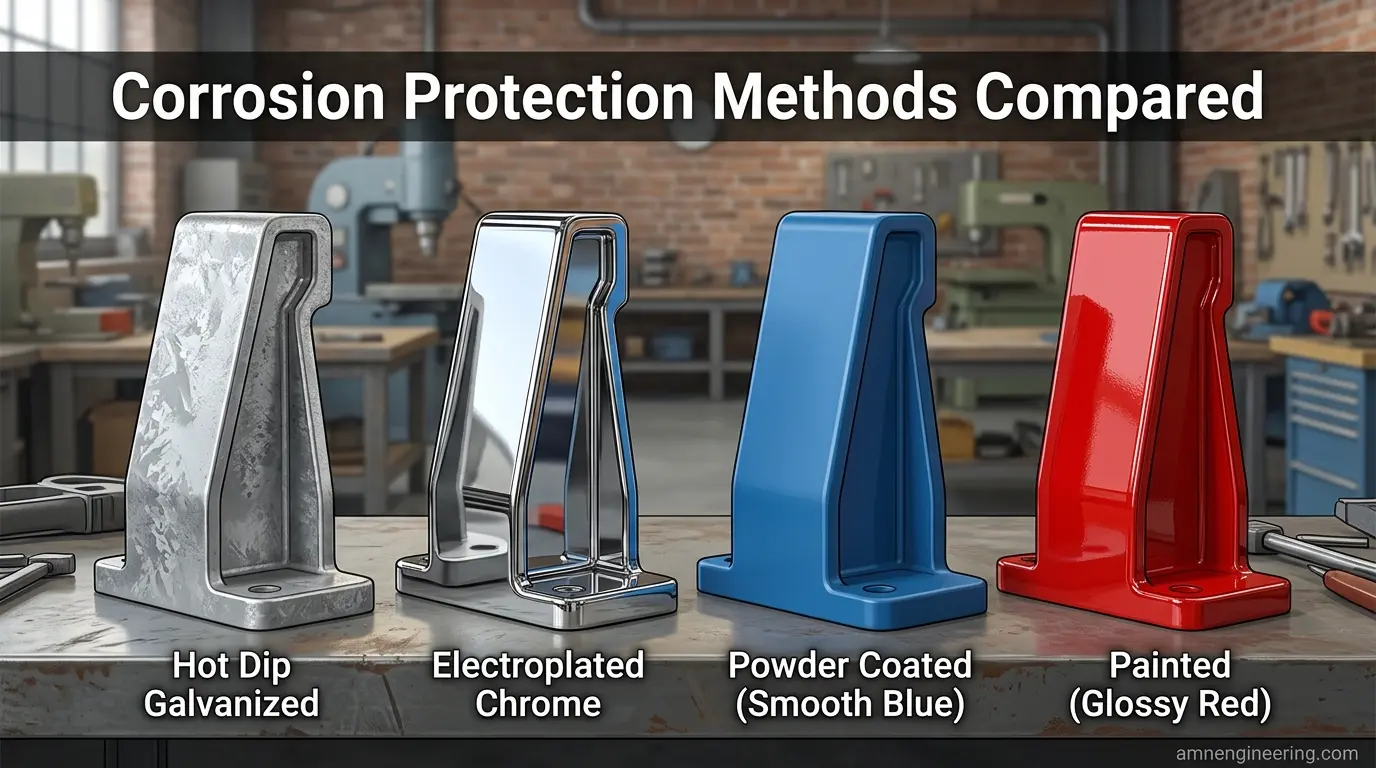
Steel corrodes when it meets moisture and oxygen. Left unprotected, mild steel can lose 0.1mm to 0.5mm of thickness per year, weakening structures and failing components long before their design life. Picking the right corrosion protection method is one of the most important decisions in any steel project.
This guide compares the four main corrosion protection methods for steel parts: hot dip galvanizing, electroplating, powder coating, and wet painting, plus anodizing for aluminum. For each, we cover how it works, where it wins, where it falls short, and what it costs over a part’s whole life.
At AMN Engineering, we offer hot dip galvanizing as part of our metal fabrication services, so this comparison comes from decades of protecting real parts for real environments.
Why Corrosion Protection Is Essential for Steel Parts
Steel corrodes when it comes in contact with moisture and oxygen. Left unprotected, mild steel can lose 0.1mm to 0.5mm of thickness per year depending on the environment. In coastal or industrial areas, the rate can be even higher. This leads to weakened structures, failed components, expensive replacements, and safety hazards.
Choosing the right corrosion protection method for steel parts saves money in the long run. The initial cost of protection is always a fraction of the cost of premature failure and replacement. The challenge is picking the right method for your specific application, environment, and budget.
In this guide, we compare all major corrosion protection methods so you can make an informed decision for your next project. We offer hot dip galvanizing in house as part of our metal fabrication services.
Hot Dip Galvanizing
How It Works
The steel part is cleaned, fluxed, and then dipped into a bath of molten zinc at approximately 450°C. The zinc reacts with the steel surface to form a series of zinc iron alloy layers topped with a layer of pure zinc. The total coating thickness is typically 45 to 85 microns for structural steel.
Key Advantages
Sacrificial protection. If the coating is scratched or damaged, the surrounding zinc corrodes preferentially to protect the exposed steel. This is called cathodic protection and it is the main reason galvanizing outperforms barrier coatings like paint.
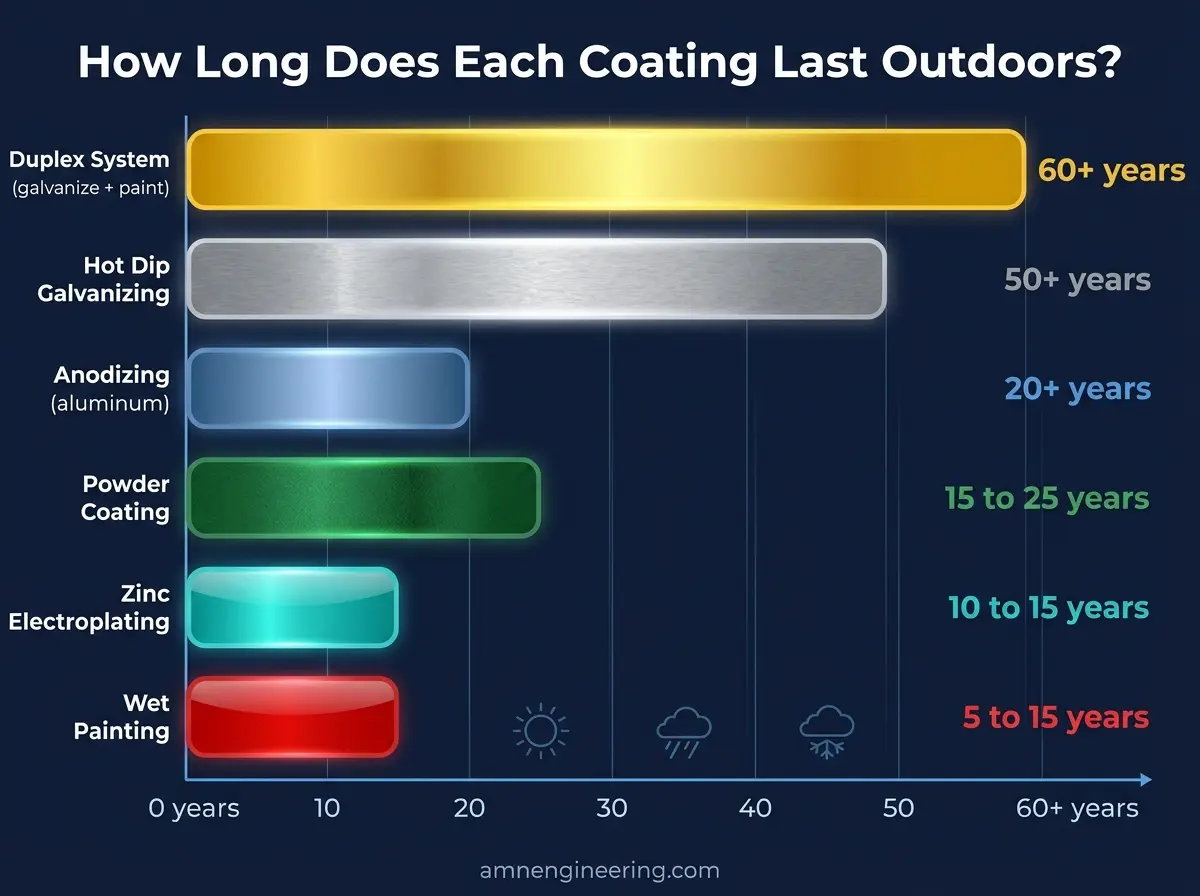
Long lifespan. Hot dip galvanizing provides 50 to 100 years of protection in rural atmospheres and 20 to 50 years in industrial environments.
Complete coverage. The dipping process coats all surfaces including inside hollow sections, corners, and hard to reach areas. This is a significant advantage over spray applied coatings.
Low maintenance. Once galvanized, the part requires no maintenance for decades. There is no need for recoating or touch ups.
Limitations
The finish is a matte grey appearance that some projects do not want for aesthetic reasons. Maximum part size is limited by the size of the galvanizing bath. Very heavy or large structures may need to be galvanized in sections.
Best Applications
Structural steel, outdoor frameworks, guard rails, electrical conduits, poles, brackets, cable trays, and any part exposed to weather or buried underground. To understand why zinc lasts so long, read how hot dip galvanizing works.
Electroplating (Zinc, Chrome, and Nickel)
How It Works
The part is submerged in an electrolyte solution containing dissolved metal ions. An electric current causes the metal to deposit onto the part surface as a thin, uniform coating. The most common types are zinc plating, chrome plating, and nickel plating.
Zinc Electroplating
Deposits a thin zinc layer (typically 5 to 25 microns) onto the steel surface. Much thinner than hot dip galvanizing but provides good corrosion resistance for indoor and mild environments. Often finished with a chromate passivation for additional protection and a bright appearance.
Chrome Plating
Provides a hard, shiny, decorative finish with good wear resistance. Hard chrome plating (industrial chrome) is used on hydraulic rods, piston shafts, and bearing surfaces. Decorative chrome is used on fittings and fixtures.
Nickel Plating
Offers good corrosion resistance with an attractive silver finish. Often used as an undercoat before chrome plating. Electroless nickel plating provides a very uniform coating even on complex geometries.
Key Advantages
Thin, precise coatings that do not change part dimensions significantly. Excellent for parts with tight tolerances. Available in various finishes including bright, matte, and satin. Can plate specific areas by masking.
Limitations
Thinner coating means shorter outdoor lifespan compared to galvanizing. Some plating processes use hazardous chemicals. Hydrogen embrittlement is a risk for high strength steel parts unless properly baked after plating. For a direct head to head, see galvanizing vs electroplating vs powder coating.
Best Applications
Fasteners, fittings, decorative hardware, hydraulic components, wear surfaces, and indoor parts requiring a clean appearance.
Powder Coating
How It Works
Dry powder (typically polyester, epoxy, or a hybrid) is electrostatically sprayed onto the part and then cured in an oven at 160°C to 200°C. The powder melts and flows into a smooth, hard film. Typical coating thickness is 60 to 120 microns.
Key Advantages
Durable finish. Powder coating produces a harder, more chip resistant finish than wet paint. It also resists fading from UV exposure better than most paints.
Color options. Available in virtually any color and finish, including matte, gloss, textured, and metallic. This makes it the preferred choice when appearance matters.
Environmentally friendly. Contains no solvents or volatile organic compounds (VOCs). Overspray can be recycled, reducing waste.
Uniform coverage. The electrostatic application process produces an even coating across the entire part surface.
Limitations
The curing process requires high temperatures, so powder coating is not suitable for parts that cannot handle oven heat (rubber seals, electronics). It provides barrier protection only, meaning any scratch that exposes bare steel will allow corrosion to begin at that point.
Best Applications
Indoor and outdoor furniture, enclosures, panels, brackets, architectural metalwork, consumer products, and any part where color and appearance are important.
Wet Painting
How It Works
Liquid paint is applied by spray gun, brush, or roller. The paint dries and forms a barrier film on the surface. Modern industrial paints are typically applied as a multi layer system: a zinc rich primer, an intermediate coat, and a topcoat. The total system thickness is usually 200 to 400 microns.
Key Advantages
Lowest initial cost. Paint is the cheapest protection method for initial application, especially for small areas or touch ups.
Easy to apply on site. Paint can be applied in the field without any special equipment. This makes it ideal for repairs, maintenance, and structures that cannot be moved.
Wide color range. Like powder coating, paint is available in any color for aesthetic requirements.
Limitations
Maintenance required. Paint systems typically need recoating every 3 to 7 years depending on the environment. This adds ongoing cost.
Quality depends on application. Uneven application, improper surface preparation, or applying in the wrong conditions (too humid, too cold) leads to premature failure.
Barrier protection only. Like powder coating, any break in the paint film allows corrosion to start.
Best Applications
Field touch ups and repairs, large structures that cannot be moved, projects with tight budgets, and situations where frequent color changes are needed.
Anodizing (For Aluminum Only)
How It Works
Anodizing is an electrochemical process that converts the aluminum surface into a durable aluminum oxide layer. The part is immersed in an acid electrolyte bath and an electric current causes the oxide layer to grow from the base metal. Typical anodized layers are 5 to 25 microns for decorative work and up to 50 microns for hard anodizing.
Key Advantages
The oxide layer is extremely hard and wear resistant. It is integral to the metal surface, so it cannot peel or flake. Anodized surfaces can be dyed in various colors. The process also provides good electrical insulation.
Limitations
Anodizing works only on aluminum and aluminum alloys. It does not work on steel, stainless steel, or other metals. The color options fade over time with UV exposure.
Best Applications
Aluminum extrusions, heat sinks, architectural aluminum panels, aerospace components, and consumer electronics housings.
Comparison Table: All Methods Side by Side
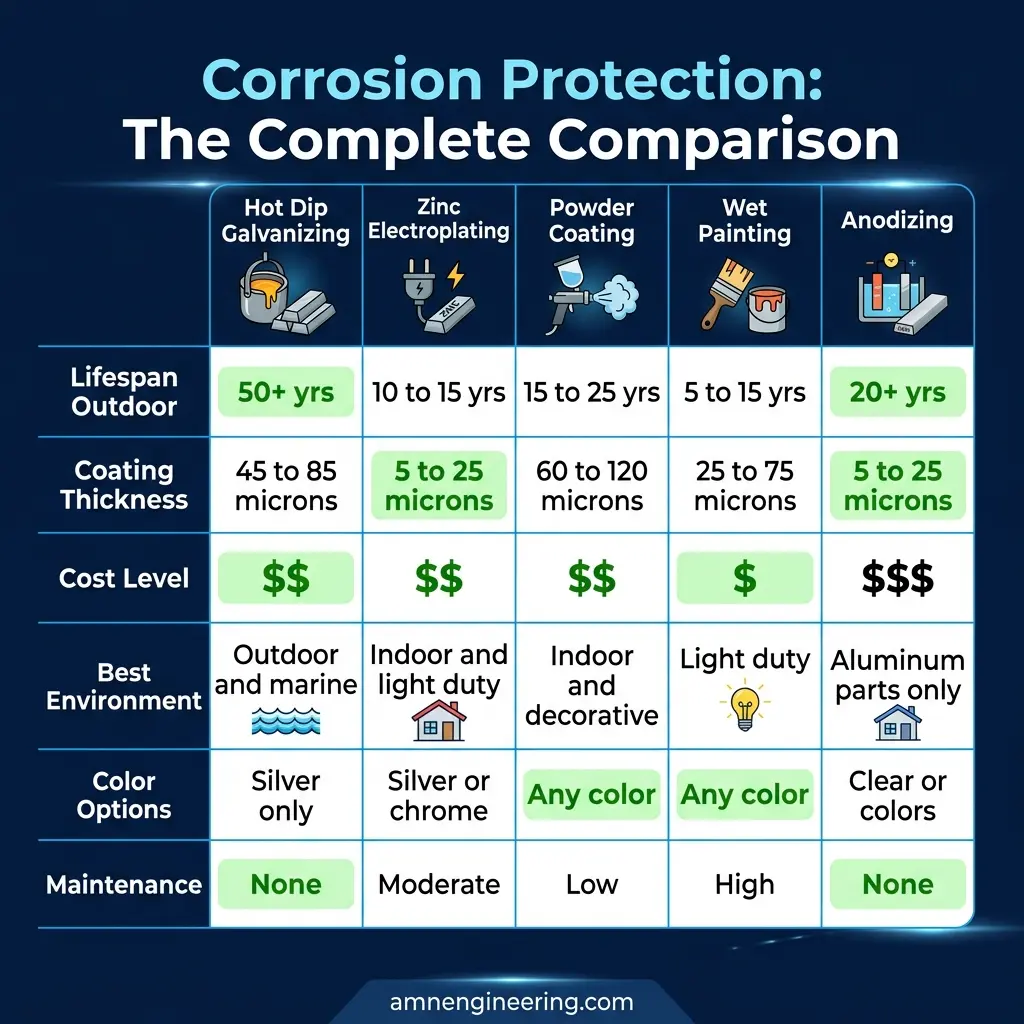
The table below sets the four main steel protection methods against each other on thickness, lifespan, cost, and the factors that decide most projects.
| Factor | Hot Dip Galvanizing | Zinc Electroplating | Powder Coating | Wet Painting |
|---|---|---|---|---|
| Coating Thickness | 45 to 85 microns | 5 to 25 microns | 60 to 120 microns | 200 to 400 microns (system) |
| Outdoor Lifespan | 20 to 100 years | 2 to 5 years | 10 to 20 years | 3 to 7 years (per coat) |
| Cathodic Protection | Yes | Yes (limited) | No | No |
| Self Healing | Yes | Minimal | No | No |
| Color Options | Grey only | Silver, yellow, black | Any color | Any color |
| Initial Cost | Moderate | Low to Moderate | Moderate | Low |
| Maintenance Cost | None | Moderate | Low | High (recoating) |
| Lifecycle Cost | Lowest | Moderate | Low to Moderate | Highest |
| Temperature Limit | Not affected | Not affected | 120°C to 200°C | Depends on paint type |
| Best For | Structural, outdoor | Fasteners, indoor | Decorative, mild outdoor | Field repairs, large structures |
How to Choose the Right Method
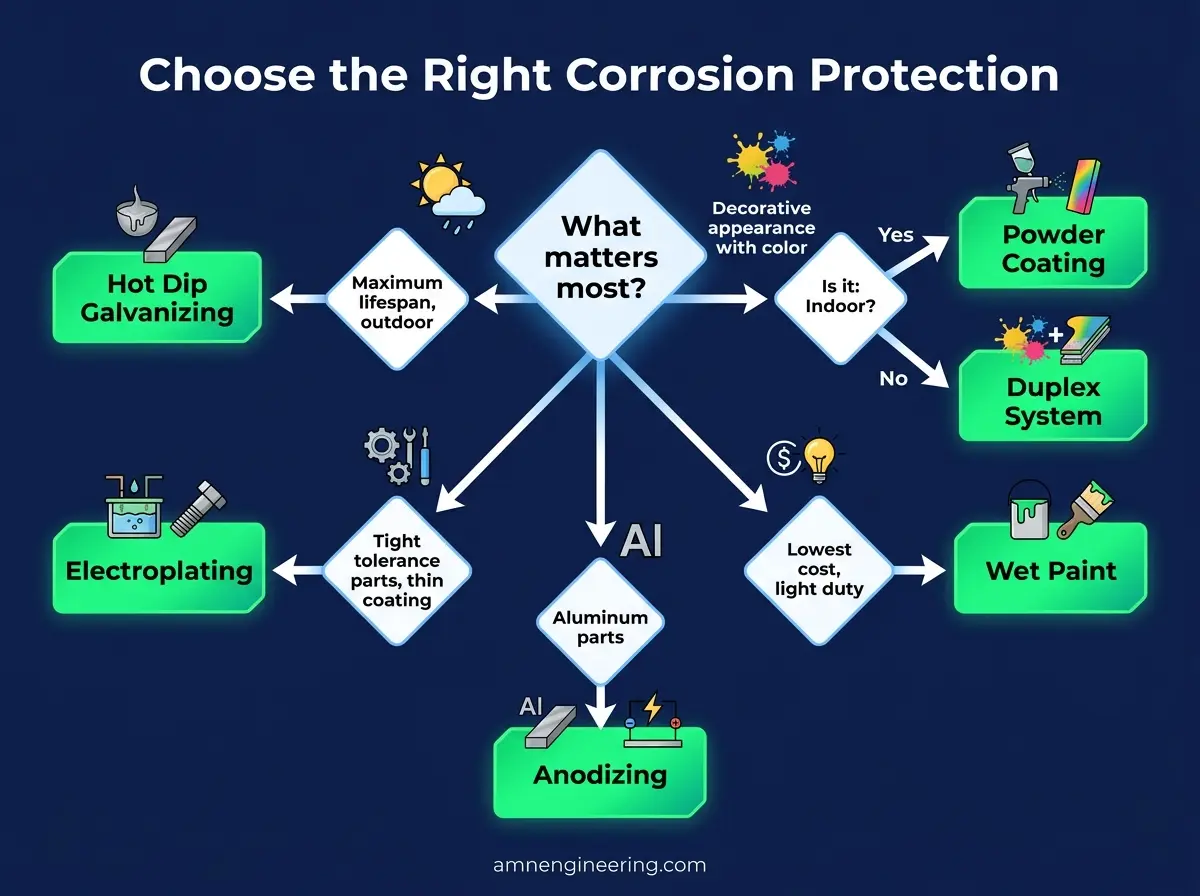
The right corrosion protection depends on answering these questions.
Where will the part be used?
- Indoor, climate controlled: Zinc electroplating or powder coating is usually sufficient.
- Outdoor, mild climate: Powder coating or hot dip galvanizing works well.
- Outdoor, coastal or industrial: Hot dip galvanizing is the clear winner.
- Buried underground or submerged: Hot dip galvanizing, often combined with additional wrapping.
Does appearance matter?
If color and finish are important (consumer products, architectural work, furniture), powder coating is the best choice. If appearance is secondary to durability (structural steel, conduits, brackets), hot dip galvanizing wins on performance and lifecycle cost.
What is the project budget?
For short term projects or disposable parts, painting or zinc plating keeps costs down. For infrastructure with a 20 to 50 year design life, hot dip galvanizing gives the lowest total cost of ownership because it requires zero maintenance.
What are the part dimensions and tolerances?
Hot dip galvanizing adds 45 to 85 microns to the surface and can cause distortion in thin sheet metal. For precision parts with tight tolerances, zinc electroplating (5 to 25 microns) or thin film powder coating preserves dimensions better. If you are weighing galvanized steel against a corrosion resistant base metal, compare galvanized steel vs stainless steel for outdoor use.
Duplex Systems for Maximum Protection
A duplex system applies a paint or powder coat over a galvanized surface. This provides both cathodic protection from the zinc and barrier protection from the topcoat. Under BS EN ISO 12944, a duplex system can extend the total protection life by 1.5 to 2.3 times compared to either system used alone.
Example: A galvanized steel railing with a powder coated finish provides both the 50+ year zinc protection and the color aesthetic the architect requires. If the topcoat is scratched, the zinc layer underneath still prevents rust.
Duplex systems are common in infrastructure projects, bridges, stadiums, and high end architectural metalwork. For the coating thickness and inspection rules behind the galvanized layer, see the ISO 1461 galvanizing standard explained.
Get Your Parts Protected at AMN
At AMN Engineering, we provide hot dip galvanizing along with full metal fabrication services. We can fabricate your parts, galvanize them, and ship them ready for installation, all under one roof.
We manufacture GI conduits, conduit fittings, structural brackets, cable trays, and custom fabricated steel parts with hot dip galvanizing as standard. Send us your drawings and we will recommend the best protection method and provide a complete quote.
Frequently Asked Questions
Hot dip galvanizing provides the longest lasting protection, typically 50 to 100 years in rural environments and 20 to 50 years in industrial or coastal settings. The zinc coating sacrificially protects the steel even if the surface is scratched or damaged.
Yes, powder coating is generally more durable than wet paint. It provides a thicker, more uniform coating that resists chipping, scratching, and fading better than conventional paint. Powder coating also contains no solvents, making it more environmentally friendly.
Yes, this is called a duplex system and it provides the best of both worlds. The galvanized layer provides sacrificial cathodic protection while the powder coat adds color and additional barrier protection. A duplex system can last 1.5 to 2 times longer than either method alone.
Hot dip galvanizing involves dipping steel into molten zinc at around 450 degrees Celsius, producing a thick coating of 45 to 85 microns. Electroplating uses an electric current to deposit a thin layer of zinc, chrome, or nickel, typically 5 to 25 microns thick. Galvanizing is better for structural and outdoor parts while electroplating gives a thinner, more decorative finish.
Painting is the cheapest initial option for small areas and indoor applications. However, it requires regular recoating every 3 to 7 years. For long term cost effectiveness, hot dip galvanizing offers the lowest lifecycle cost because it lasts decades with no maintenance.
