Hot Dip Galvanizing vs Electroplating vs Powder Coating: Which Finish Lasts Longest?
By Adil, Managing Director at AMN Engineering · · 11 min read
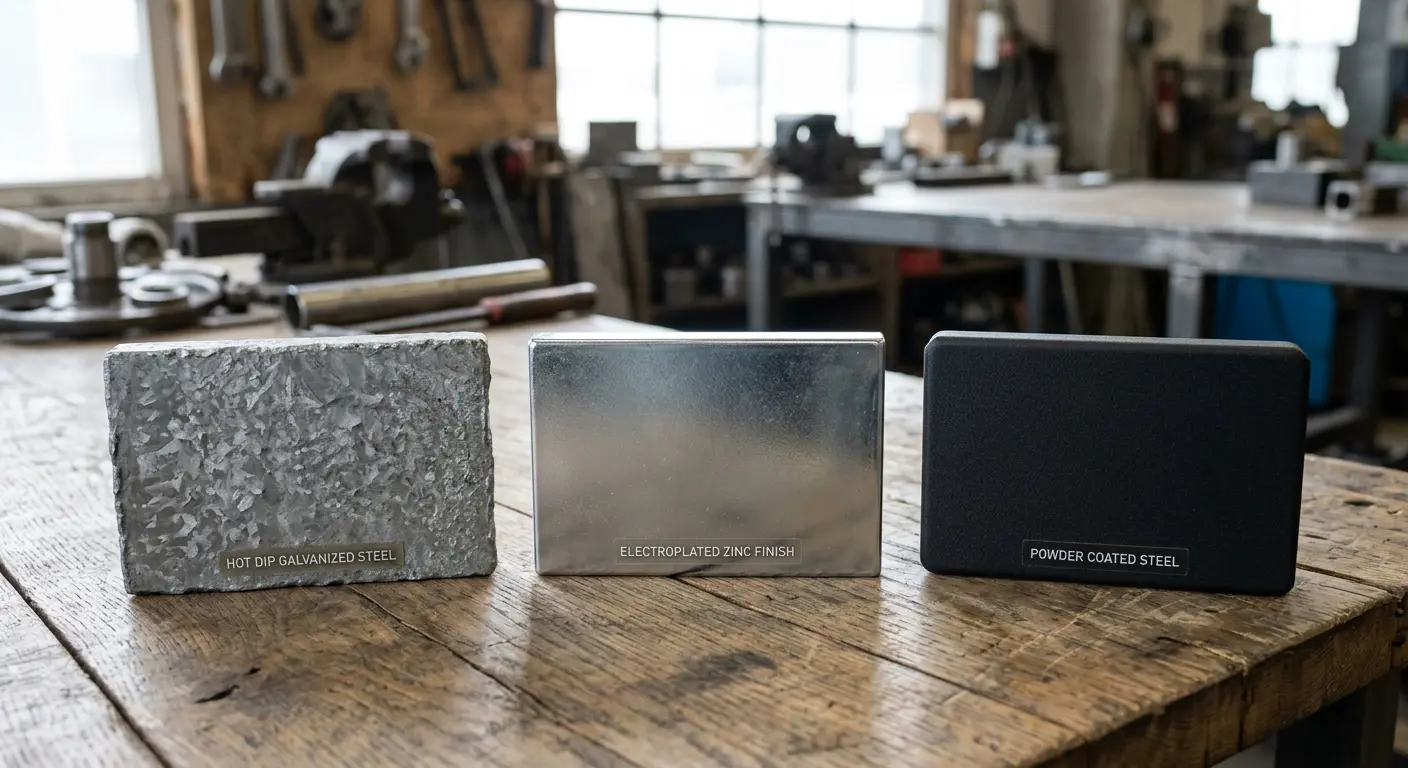
Hot dip galvanizing vs electroplating vs powder coating. Three of the most common surface finishes for steel, and choosing the wrong one can mean your parts fail years before they should. Getting this decision right can double or triple the lifespan of your steel components while keeping costs under control.
This guide compares all three finishes in plain language. Lifespan, cost, corrosion protection, and when to use each one. Based on 25 years of finishing steel parts at our factory in Lahore, where we run in house galvanizing and powder coating lines.
The Quick Answer
Need maximum corrosion protection for outdoor steel? Hot dip galvanizing. 50+ years. Zero maintenance.
Need a shiny uniform zinc finish on small parts? Electroplating. Thin coating, good for indoor use.
Need color and appearance? Powder coating. Wide range of colors. 10 to 20 years.
Need the absolute best protection? Galvanize first, then powder coat (duplex system). 1.5 to 2 times longer.
How Hot Dip Galvanizing Works
The steel part is cleaned thoroughly (degreased, pickled in acid, fluxed) and then immersed in a bath of molten zinc at 450 degrees. The zinc metallurgically bonds with the steel surface, creating a series of zinc iron alloy layers topped with pure zinc.
This creates a thick coating, typically 45 to 85 micrometers. Unlike paint or powder coating, the zinc cannot peel off because it is metallurgically bonded to the steel at the molecular level.
Sacrificial protection. This is the key advantage. Even when the galvanized surface is scratched or damaged, the surrounding zinc sacrifices itself to protect the exposed steel. The steel does not rust even where the coating is broken. No other common coating offers this self healing property.
Standard: BS EN ISO 1461.
How Electroplating Works
A thin layer of metal is deposited onto the part using electrical current. The part is submerged in a zinc solution (electrolyte), and an electrical current causes zinc ions to deposit onto the steel surface.
The resulting coating is 5 to 25 micrometers. Very uniform, smooth, and shiny. Electroplating produces a much thinner coating than hot dip galvanizing, which means significantly less corrosion protection.
Electroplating can also deposit other metals including nickel, chrome, and cadmium, depending on the application requirements.
How Powder Coating Works
Dry powder is sprayed onto the part using an electrostatic gun. The charged powder particles cling to the grounded steel surface. The coated part is then baked in an oven at 160 to 200 degrees, which melts and cures the powder into a smooth, hard, durable finish.
Powder coating thickness is typically 60 to 120 micrometers. It is available in virtually any color and provides an attractive, smooth finish.
Barrier protection only. Powder coating protects steel by acting as a physical barrier between the steel and the environment. If that barrier is scratched, chipped, or damaged, the bare steel underneath is exposed and begins to corrode immediately. There is no sacrificial protection.
The Full Comparison
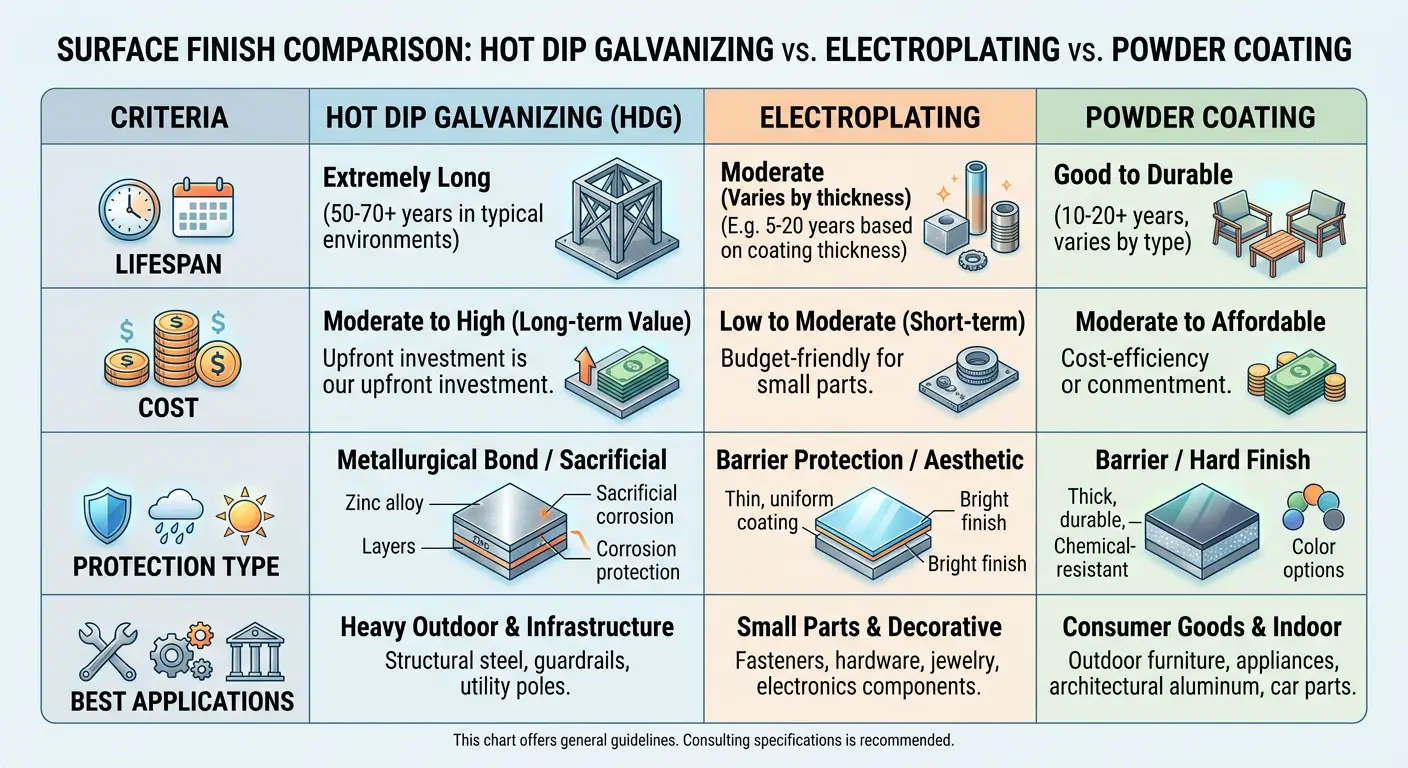
| Factor | Hot Dip Galvanizing | Electroplating (Zinc) | Powder Coating |
|---|---|---|---|
| Protection Type | Barrier + sacrificial | Barrier + limited sacrificial | Barrier only |
| Coating Thickness | 45 to 85 micrometers | 5 to 25 micrometers | 60 to 120 micrometers |
| Lifespan (Outdoor) | 50 to 100 years (mild) | 2 to 5 years | 10 to 20 years |
| Lifespan (Indoor) | 100+ years | 10 to 20 years | 20 to 30 years |
| Scratch Protection | Self healing (sacrificial) | Minimal | None (steel exposed) |
| Appearance | Matte gray, spangled | Bright, shiny, uniform | Any color, smooth, attractive |
| Color Options | Gray/silver only | Silver/chrome/gold | Unlimited colors |
| Max Part Size | Large (limited by bath size) | Small to medium | Medium (limited by oven size) |
| Cost (Large Parts) | Lowest | Not practical | Higher |
| Cost (Small Parts) | Higher per piece | Lowest | Moderate |
| Best For | Outdoor structures, conduits | Fasteners, brackets, indoor parts | Visible parts, furniture, enclosures |
Lifespan: Which Lasts Longest?
Hot Dip Galvanizing: 50 to 100+ Years
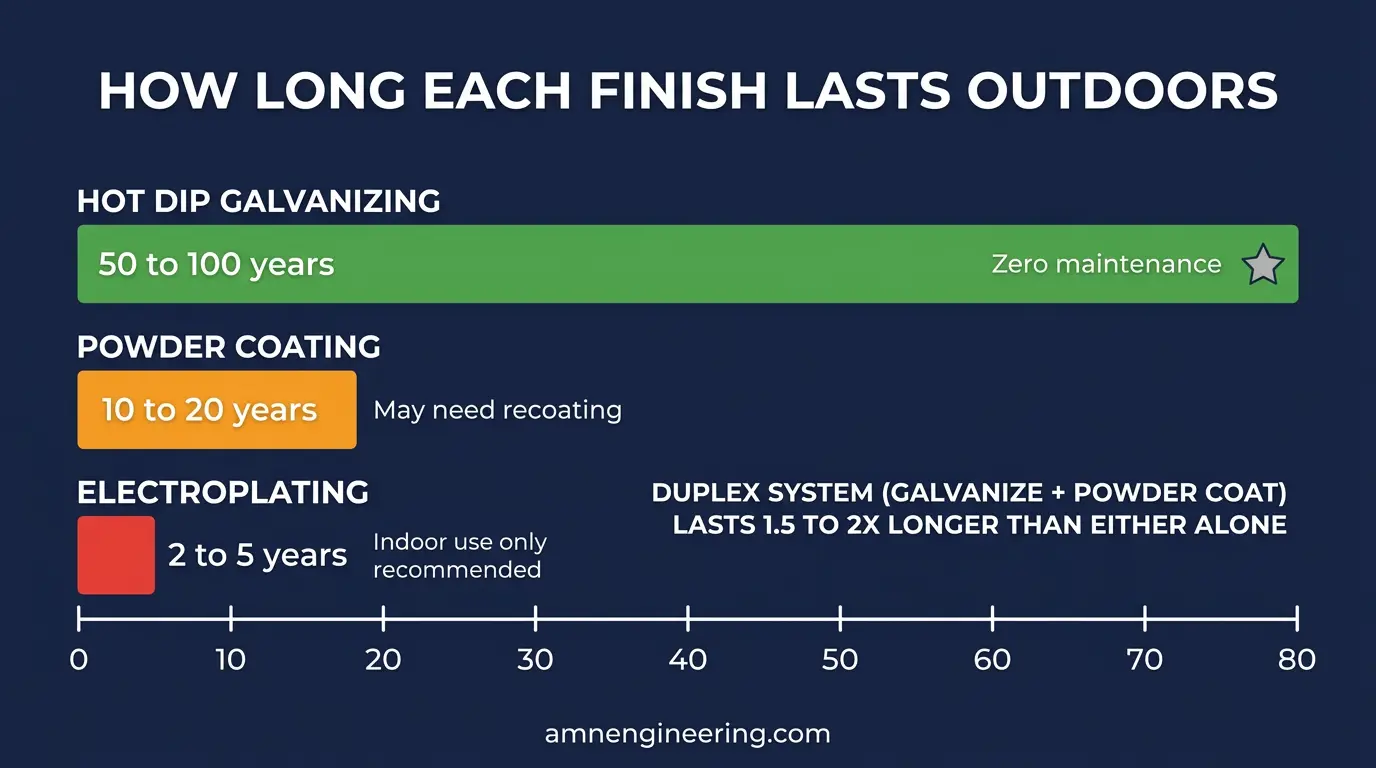
Zinc corrodes at a predictable rate of 1 to 2 micrometers per year in mild environments. With a coating thickness of 45 to 85 micrometers, hot dip galvanizing lasts 50 to 100+ years before the zinc is fully consumed and the steel begins to corrode. In indoor environments, galvanizing lasts essentially forever.
Electroplating: 2 to 5 Years Outdoors
With a coating thickness of only 5 to 25 micrometers, electroplated zinc is consumed much faster. Outdoors, electroplated parts typically show red rust within 2 to 5 years. For indoor applications where there is no moisture exposure, electroplating is adequate and can last 10 to 20 years.
Powder Coating: 10 to 20 Years Outdoors
Powder coating provides good protection as long as the coating remains intact. Outdoors, UV exposure gradually degrades the coating, and any chips or scratches expose bare steel which rusts immediately. Typical outdoor lifespan is 10 to 20 years before significant maintenance or recoating is needed.
Cost: Upfront vs Lifecycle
Upfront Cost
For large structural parts, hot dip galvanizing is the cheapest finish per square meter. The process is fast, batch based, and efficient for large volumes of heavy steel. For small parts, electroplating is typically the cheapest option. Powder coating falls in the middle for most part sizes.
Lifecycle Cost
This is where galvanizing wins by a huge margin. Because galvanizing lasts 3 to 5 times longer than powder coating for a similar or lower upfront cost, the cost per year of protection is dramatically lower. A galvanized steel structure that lasts 75 years with zero maintenance will cost a fraction of a powder coated structure that needs recoating every 15 to 20 years.
On a lifecycle cost basis, hot dip galvanizing is almost always the most economical choice for any steel that will be exposed to outdoor or corrosive environments.
When to Choose Each Finish
Choose Hot Dip Galvanizing When
- The steel will be used outdoors or in corrosive environments
- Maximum corrosion protection is the priority
- Zero maintenance is required over the life of the structure
- You are finishing conduits or conduit fittings
- BS EN ISO 1461 compliance is specified
Choose Electroplating When
- The parts are small (fasteners, brackets, hardware)
- The parts will be used indoors
- A bright, shiny appearance is needed
- A thin, uniform coating is required
- Budget is the primary concern for indoor parts
Choose Powder Coating When
- Color and appearance matter
- The parts will be used indoors or in sheltered outdoor locations
- A specific color is needed for branding, safety coding, or aesthetics
- UV resistance and fade resistance are important
The Duplex System: Galvanizing Plus Powder Coating
The duplex system gives you the best of both worlds. Galvanize the steel first for maximum corrosion protection, then apply powder coating on top for color and appearance.
The combined system lasts 1.5 to 2 times longer than either coating applied alone. The powder coating protects the zinc from atmospheric corrosion, which slows down the zinc consumption rate. And if the powder coating is damaged, the galvanizing underneath continues to protect the steel through sacrificial corrosion.
The duplex system is common for:
- Street furniture (benches, bollards, lamp posts)
- Architectural steelwork where color is needed
- Outdoor enclosures and cabinets
- Conduits needing color coding
At AMN Engineering, we offer in house galvanizing followed by powder coating, so both processes are done under one roof with full quality control.
Frequently Asked Questions
Hot dip galvanizing lasts 50 to 100 years in mild environments. Powder coating lasts 10 to 20 years. Galvanizing provides roughly 3 to 5 times the lifespan, and it requires zero maintenance. If the galvanized surface is scratched, the zinc protects the steel underneath through sacrificial corrosion. If powder coat is scratched, the bare steel rusts.
Yes. This duplex system gives you the corrosion protection of galvanizing plus the color and appearance of powder coating. The combined system lasts 1.5 to 2 times longer than either coating alone.
For large structural parts, galvanizing is typically cheaper upfront and much cheaper on a lifecycle basis. For small parts where appearance matters, powder coating may be more cost effective. On a cost per year of protection basis, galvanizing is almost always the better investment.
Hot dip galvanizing dips the part in molten zinc at 450 degrees, creating a thick coating (45 to 85 micrometers) that is metallurgically bonded. Electroplating uses electrical current to deposit a thin zinc layer (5 to 25 micrometers). Galvanizing is much thicker, tougher, and longer lasting. Electroplating is thinner, shinier, and better for small indoor parts.
Hot dip galvanizing. It provides the longest protection, requires zero maintenance, and self heals when scratched. It is the worldwide standard for outdoor steel structures including street poles, guardrails, bridges, towers, and industrial frameworks.