Why Forged Components Are Stronger: The Science of Grain Flow
By Adil, Managing Director at AMN Engineering · · 6 min read
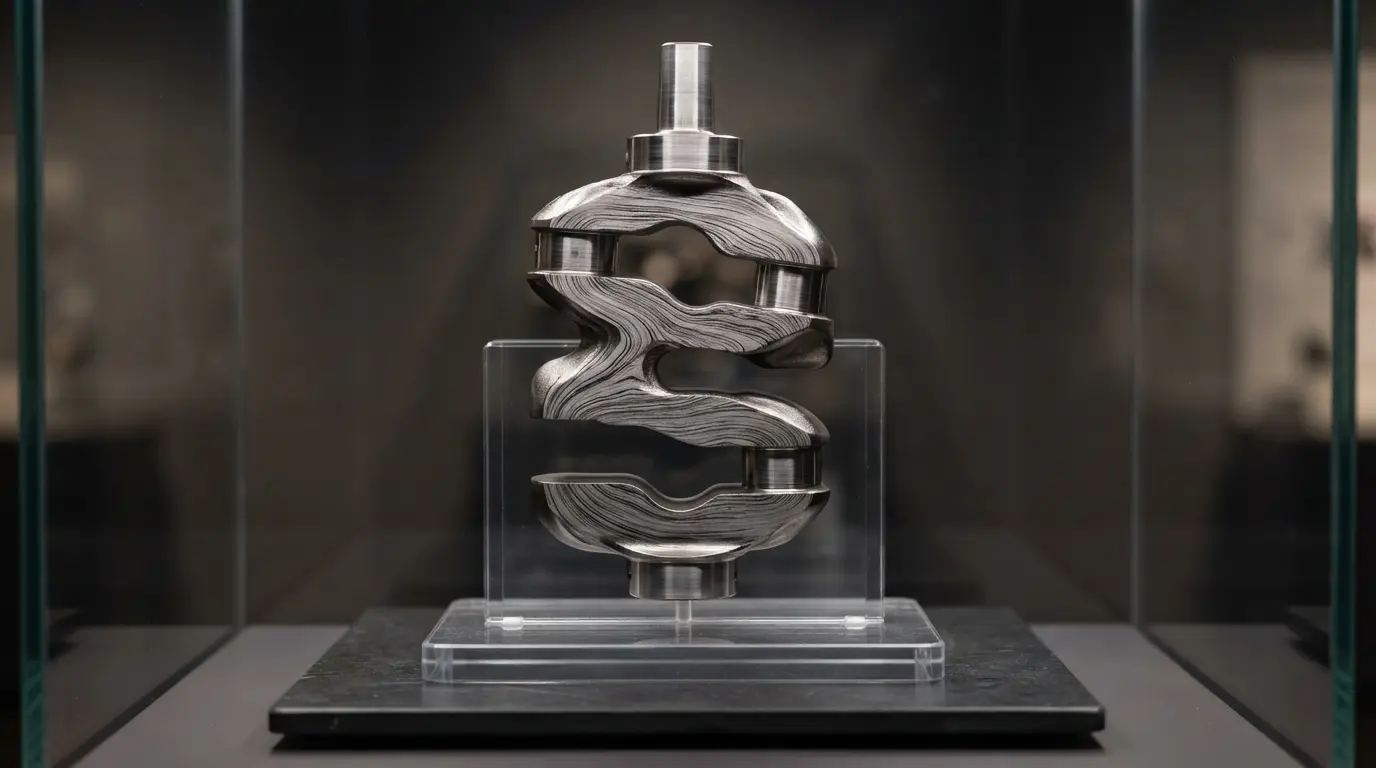
Forged parts are stronger than cast or machined parts. Every engineer knows this. But why? What is it about the forging process that creates a physically stronger component?
The answer is grain flow. When metal is forged, its internal grain structure is compressed and aligned along the shape of the part. This creates directional strength exactly where the part needs it. Cast and machined parts do not have this advantage.
This guide explains the science behind forging strength in simple, visual terms. Understanding grain flow helps you specify the right manufacturing process for critical components and justify the investment when it matters.
What Is Grain Flow?
All metals have an internal structure made up of microscopic crystals called grains. These grains form during solidification and processing of the raw material. The shape, size, and orientation of these grains determine the metal's strength, toughness, and fatigue resistance.
Grain flow refers to the direction these grains are oriented. Think of it like wood grain in timber. A piece of wood is much stronger along the grain than across it. The same principle applies to metal.
When steel is rolled into bar stock at the mill, the grains are stretched and aligned along the length of the bar. This is why bar stock is strongest along its length.
How Forging Aligns Grain
When a heated billet is forged between dies, the compressive force does two things:
1. Compresses the Grain Structure
The pressure squeezes the grains closer together, eliminating internal voids, porosity, and micro cracks. The resulting material is denser and more uniform than cast or as rolled material.
2. Aligns the Grain Along the Part Shape
As the metal flows to fill the die cavity, the grains stretch and align along the contours of the part. A forged crankshaft has grain lines that follow every curve, fillet, and journal of the crank shape.
This alignment means the part is strongest exactly where it needs to be: along the surfaces that experience the highest stress. The grain acts like reinforcing fibers running through the part.
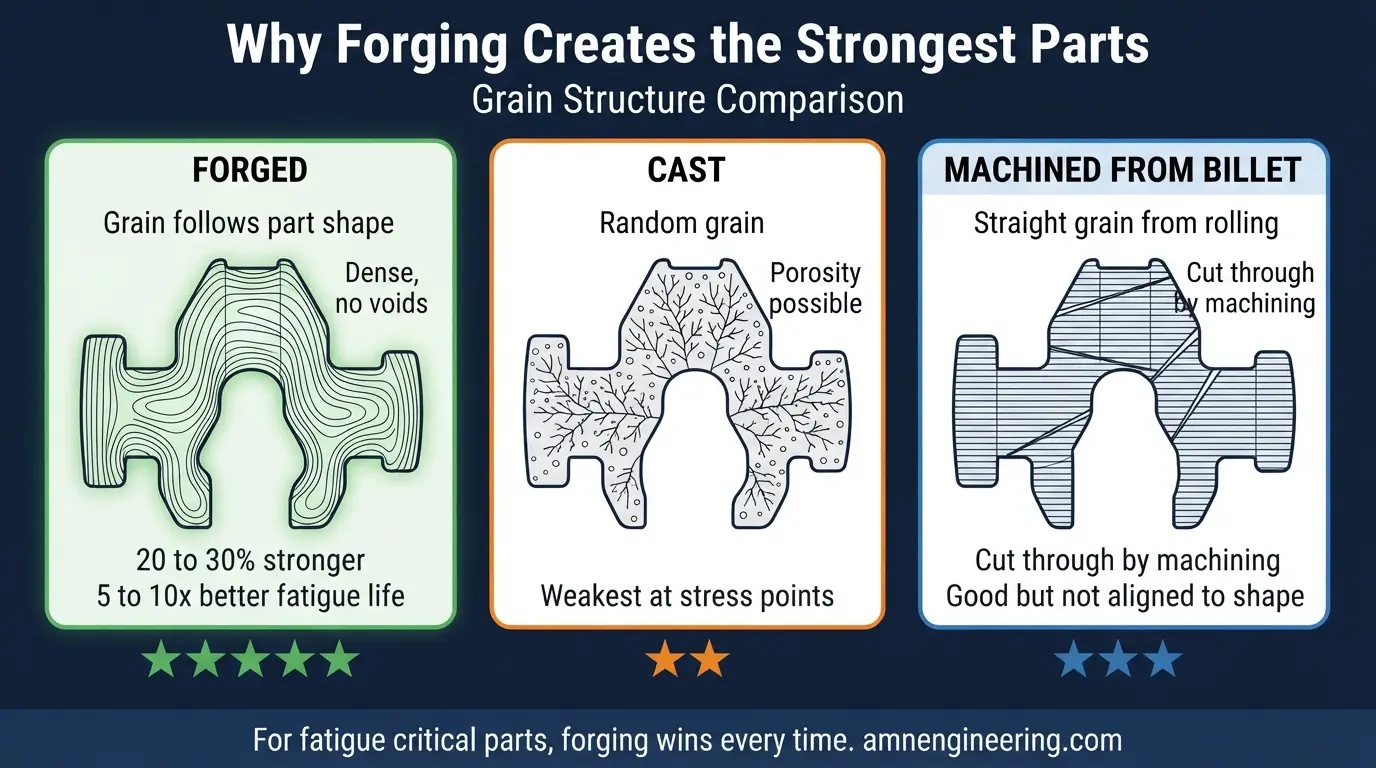
Forged vs Cast vs Machined: Grain Comparison
Forged Part
Grain lines follow the contour of the part. Dense, uniform structure. No internal voids. Strongest in the direction of loading. Imagine bending a bundle of aligned ropes versus a pile of randomly tangled ropes. The aligned bundle is far stronger.
Cast Part
Grain structure is random (dendritic pattern formed during solidification). May contain internal voids (porosity), shrinkage cavities, and inclusions. No directional strength. The weakest of the three options for mechanical applications.
Machined from Billet
Grain lines are straight (from the rolling/extrusion of the original billet). When the part is machined, the cutting tool cuts through the grain lines at various angles. The grain does not follow the part shape. Stronger than casting but weaker than forging because the grain orientation is not optimized for the part's stress patterns.
Real World Strength Difference
Tensile and Yield Strength
A forged steel component is typically 20 to 30 percent stronger in tensile and yield strength than a cast equivalent in the same material grade.
Fatigue Strength (Most Important)
The biggest advantage of forging is in fatigue strength. Fatigue is the failure that occurs when a part is subjected to repeated cyclic stress over millions of cycles (rotating shafts, oscillating linkages, vibrating structures).
Forged parts can last 5 to 10 times longer under cyclic stress before fatigue failure. This is because:
- The aligned grain resists crack initiation
- The dense structure has no internal voids where cracks can start
- The compressive residual stresses from forging resist crack propagation
Impact Resistance
Forged parts absorb more energy before fracturing (higher impact toughness). This makes them resistant to sudden shock loads that would crack a cast part.
Where Forged Parts Are Required
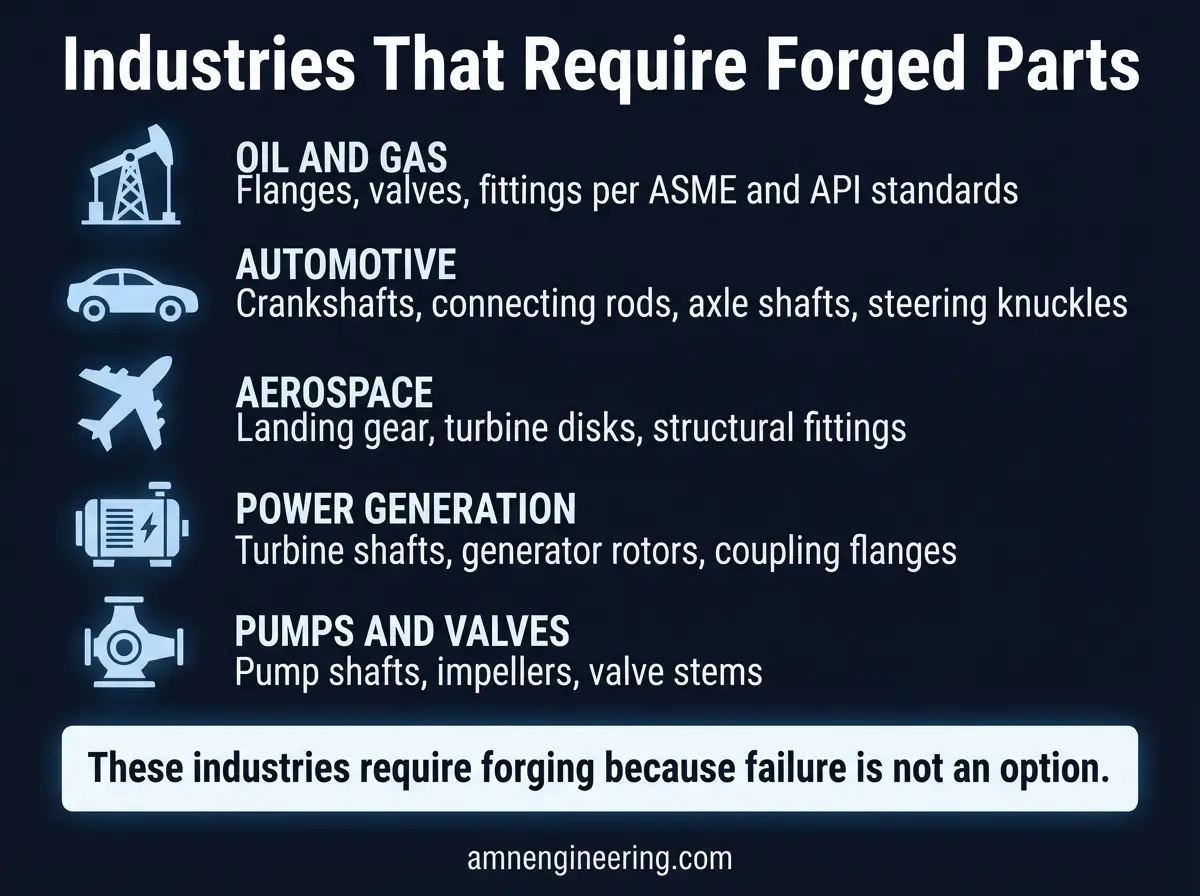
Many industry standards and specifications require forged components for critical applications:
Oil and gas: ASME and API standards require forged flanges, valves, and fittings for high pressure piping systems. Cast alternatives are not permitted above certain pressure ratings.
Automotive: Crankshafts, connecting rods, axle shafts, and steering knuckles are forged because they experience millions of fatigue cycles during a vehicle's lifetime.
Aerospace: Landing gear components, turbine disks, and structural fittings are forged for maximum strength to weight ratio and fatigue resistance.
Power generation: Turbine shafts, generator rotors, and coupling flanges are forged for the combination of strength, toughness, and fatigue resistance required at high rotational speeds.
Pumps and valves: Pump shafts, impellers, and valve stems are frequently forged when the application involves high pressure, corrosive fluids, or critical service conditions.
At AMN Engineering, we forge components followed by CNC machining to final dimensions. This gives our clients the strength advantage of forging with the precision of machining.
Frequently Asked Questions
Forging compresses and aligns the metal grain structure, creating a denser part with no internal voids. Cast parts have random grain structure with potential porosity. Forged parts are 20 to 30% stronger in tensile strength and 5 to 10 times more fatigue resistant.
For fatigue critical, high stress, or safety critical components, absolutely. The cost of a forging failure (equipment damage, downtime, safety risk) far exceeds the premium over casting or machining from billet.
Yes, on a polished and etched cross section. Acid etching reveals the grain structure, showing the flow lines in a forged part. This is sometimes done as a quality check for critical forgings.
Yes. EN24 forged parts are stronger than EN8 forged parts because EN24 has a higher base strength. Forging amplifies the properties of the base material.