Quality Control in Contract Manufacturing: How We Inspect Every Part Before Shipping
By Adil, Managing Director at AMN Engineering · · 12 min read
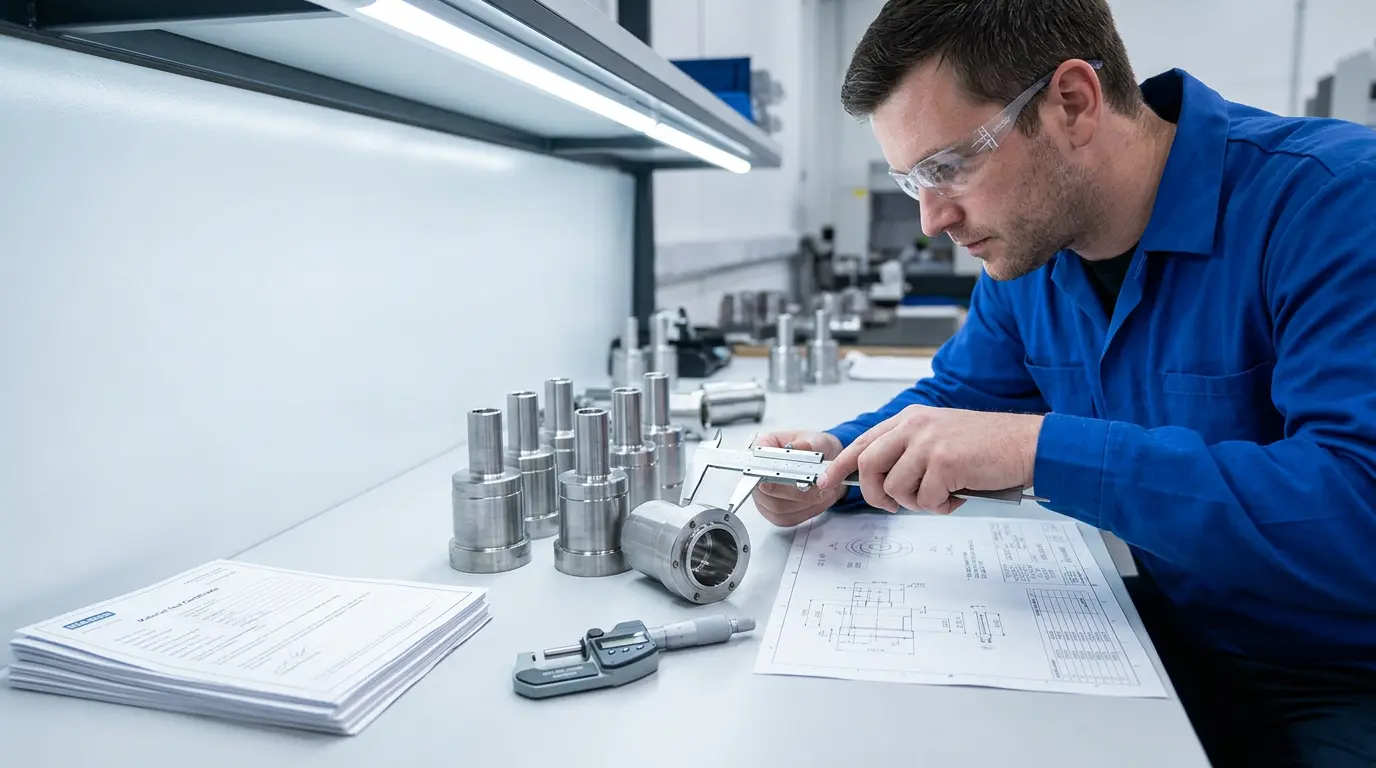
Quality control in contract manufacturing is the difference between parts that work and parts that get rejected. When outsourcing custom parts, you need confidence that what arrives matches your drawing, material specification, and tolerance requirements. This guide walks through our QC process at AMN Engineering, step by step.
Why Quality Control Matters in Contract Manufacturing
When you manufacture parts in house, you control every step. You see the material arrive, watch the machine run, and inspect the finished part yourself. When you outsource, you are trusting someone else with all of that.
Poor quality control leads to serious problems:
- Parts that do not fit during assembly
- Wrong material used without detection
- Dimensional errors caught by your customer instead of the manufacturer
- Rework, scrap, and project delays
- Lost trust between you and your end customer
Good quality control catches problems before they leave the factory. Every inspection point is a gate that prevents defective parts from reaching the next stage, and ultimately from reaching you.
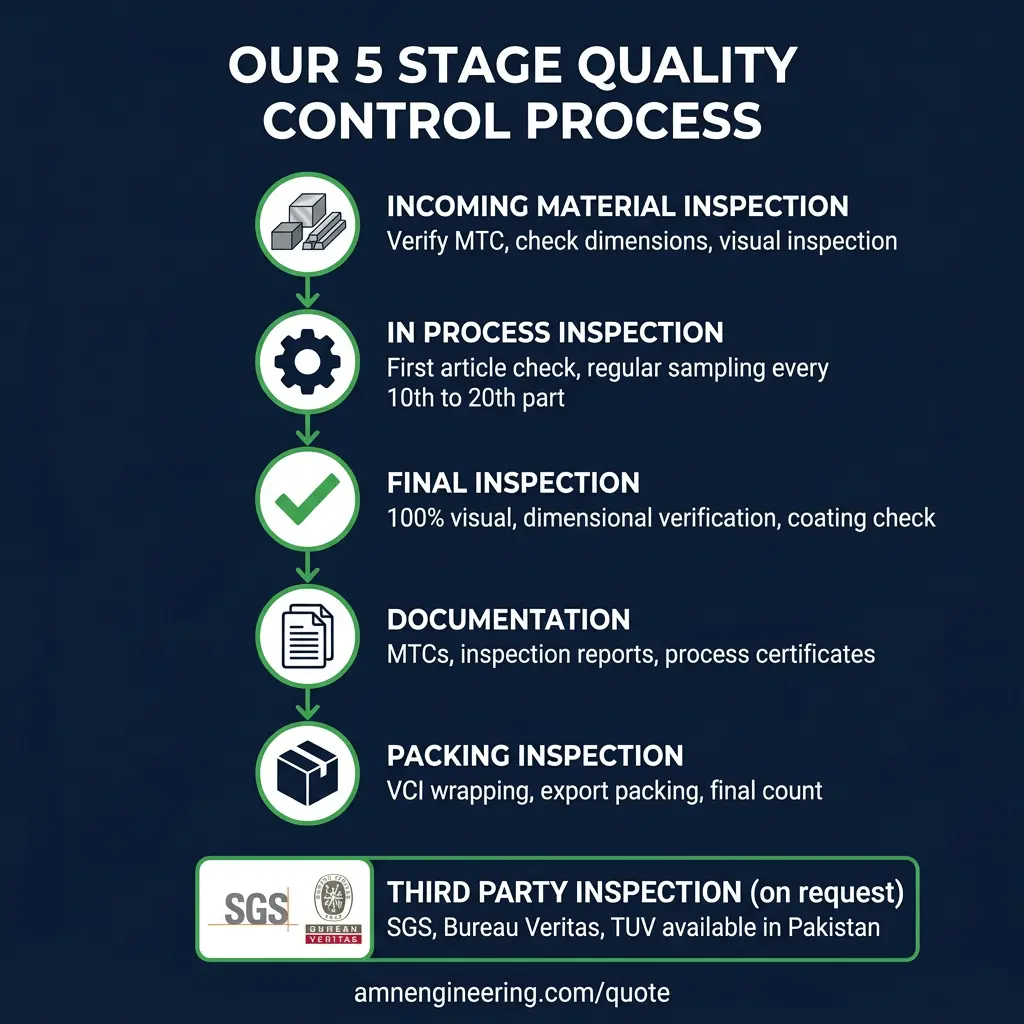
Stage 1: Incoming Material Inspection
Every order starts with raw material, and this is where quality control begins. Before any manufacturing starts, we verify that the material is correct.
What We Check
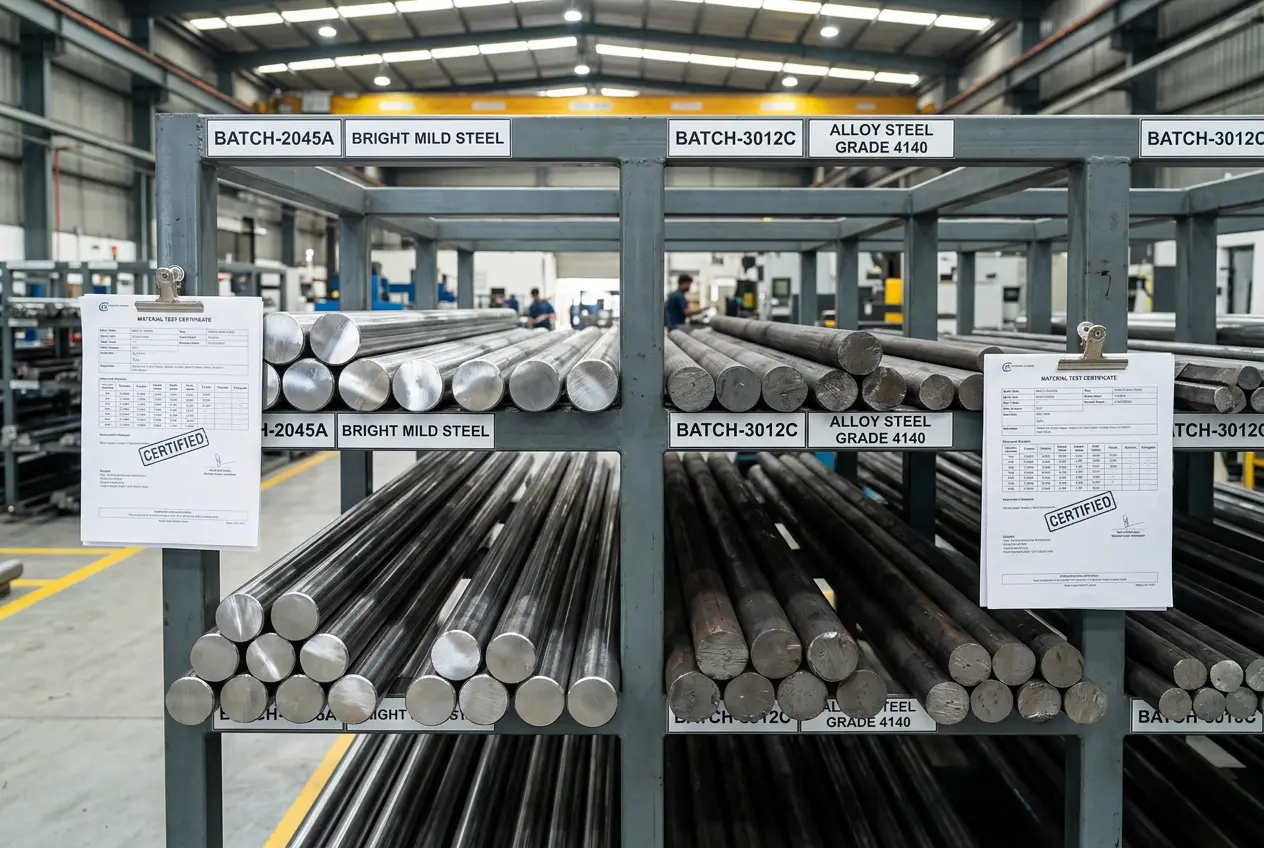
- Material test certificate (MTC) verification. The certificate from the steel mill must match the ordered grade. If the order specifies EN8, EN24, or SS304, the MTC must confirm that exact grade with chemical composition and mechanical properties.
- Dimensional check of incoming bar or plate. We measure the raw material to confirm it matches the ordered size and is within standard mill tolerances.
- Visual inspection. We check for cracks, pitting, rust, surface damage, or any defects that could affect the finished part.
- Traceability marking. Each batch of material is marked and linked to its MTC so we can trace any finished part back to the original material batch.
Why This Stage Is Critical
The most expensive quality problem in manufacturing is making parts from the wrong material. An EN8 shaft machined from mild steel looks identical but has significantly lower strength. You will not know the difference by looking at it. Only an MTC or material test can confirm the grade. Catching this at the incoming stage costs nothing. Catching it after machining 500 parts costs everything.
Stage 2: In Process Inspection
First Article Inspection
Before running a full batch, we machine the first part and inspect all critical dimensions against the drawing. If the first article passes, production continues. If it does not, the setup is adjusted and the first article is re inspected. This prevents discovering after 500 parts that the entire batch is scrap.
Regular Sampling During Production
During the production run, we inspect every 10th or 20th part depending on batch size and tolerance requirements. This catches any drift in the machine setup caused by tool wear, thermal expansion, or other variables.
What We Measure
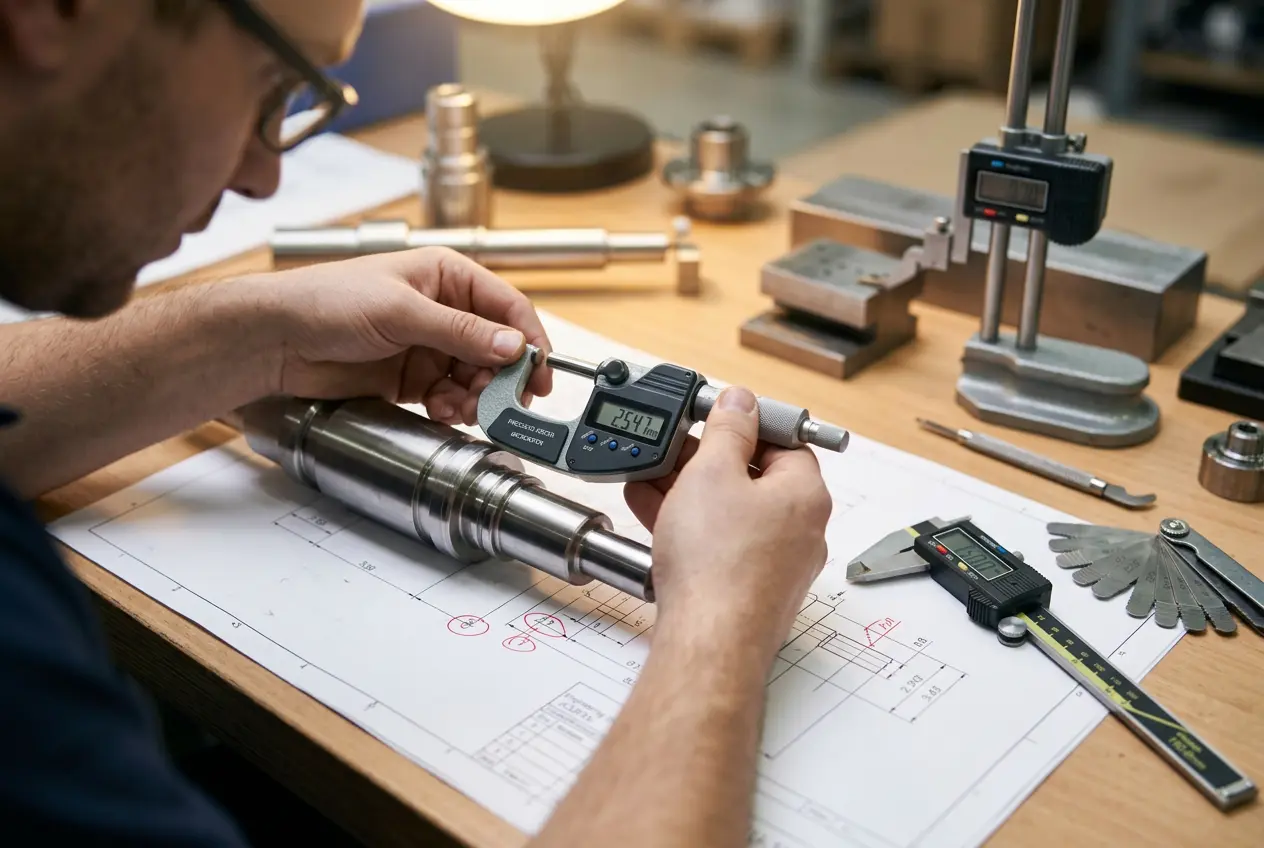
- Critical diameters. Measured with micrometers and bore gauges to the required tolerance.
- Lengths and depths. Verified with vernier calipers and depth gauges.
- Thread quality. Checked with go/no go thread gauges to confirm threads are within specification.
- Surface roughness. Measured with a surface roughness tester where specified on the drawing.
- Flatness and squareness. Verified with dial indicators and surface plates for parts where geometric tolerances are specified.
Stage 3: Final Inspection
After manufacturing is complete, every part goes through final inspection before it moves to packing.
100 Percent Visual Inspection
Every part is visually inspected for defects, burrs, scratches, and finish quality. Parts that do not meet the visual standard are set aside for rework or rejection.
Dimensional Verification
All critical dimensions are verified against the drawing. What we measure depends on the process:
- CNC machined parts: diameters, lengths, threads, hole positions, and geometric tolerances.
- Laser cut parts: profiles, hole sizes, and edge quality.
- Fabricated assemblies: overall dimensions, weld quality, and fitment.
Functional Checks
Where applicable, we perform functional checks such as assembly fitment and thread mating to ensure parts work together as intended.
Coating Verification
For parts with surface treatments, we verify the coating meets specification. Galvanized parts are checked for coating thickness per ISO 1461. Powder coated parts are checked for thickness, adhesion, and appearance.
Stage 4: Documentation
Quality is only as good as the documentation that supports it. Every shipment includes the relevant quality documents.
Material Test Certificate (MTC)
Issued per EN 10204, a 3.1 certificate is traceable to the specific heat of material. It shows the chemical composition and mechanical properties of the raw material used in your parts.
Dimensional Inspection Report
A report showing actual measured values against drawing tolerances. This includes the measurement method used, the instrument used, and a pass or fail result for each dimension.
Process Certificates
Depending on the processes involved, we provide galvanizing thickness reports, heat treatment records, welding procedure qualification records (WPQR), and pressure test certificates as applicable.
Packing List and Commercial Invoice
Complete documentation of what is in the shipment, quantities, weights, and part numbers for customs clearance and your receiving inspection.
Stage 5: Packing and Shipping Inspection
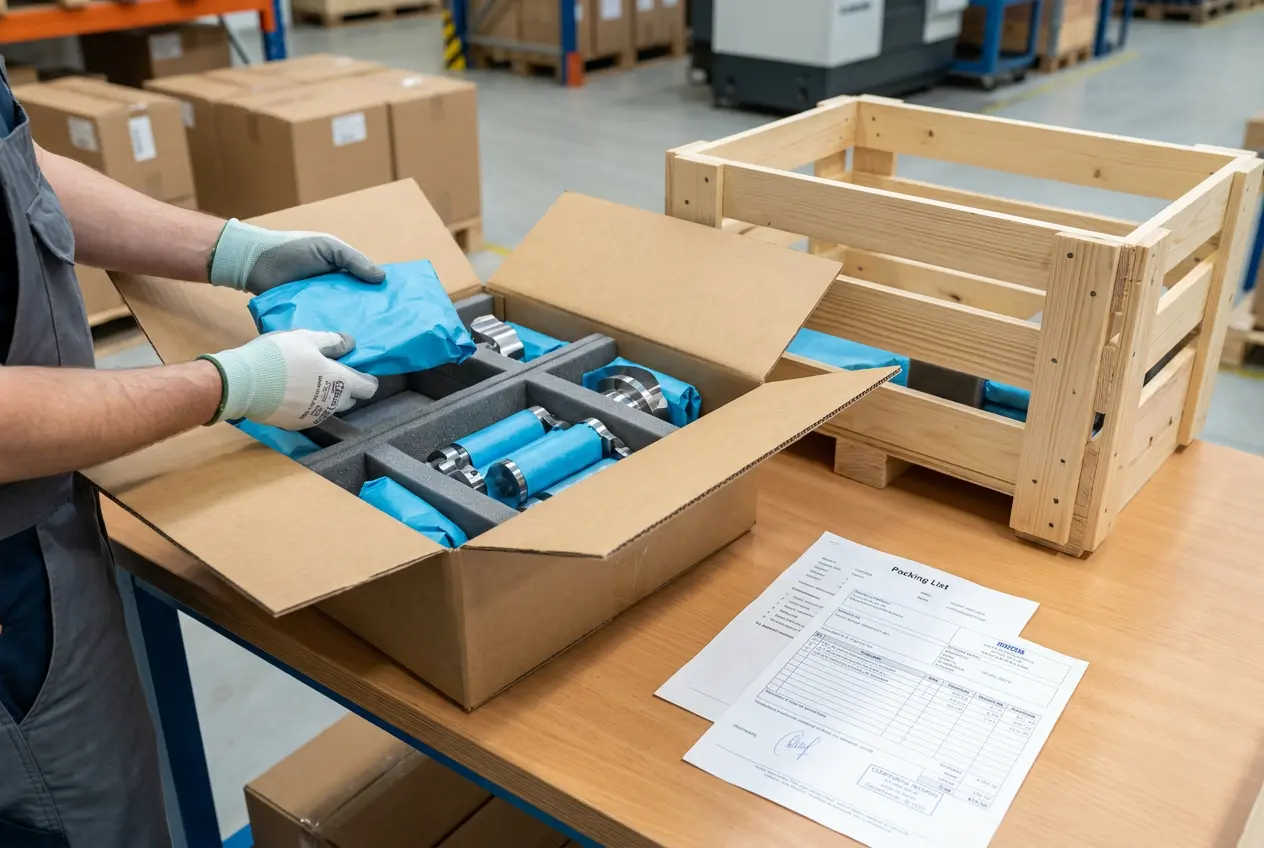
Good parts can be damaged by bad packing. We pack according to the type of part and the shipping method.
- CNC machined parts: VCI paper wrapped, packed in carton boxes with foam separators to prevent contact between parts.
- Fabricated assemblies: Packed in wooden crates with foam padding to absorb impact during transit.
- Steel conduits: Bundled, strapped, and covered with protective wrapping.
- Galvanized parts: Separated with spacers to prevent contact marks on the zinc coating.
A final count and visual check is performed during packing to confirm the correct quantity and condition of every part before the shipment is sealed.
Third Party Inspection
For first orders, high value orders, or critical application parts, we recommend arranging third party inspection. An independent inspector visits the factory, inspects the parts against your drawing, and issues their own report.
Agencies Operating in Pakistan
SGS, Bureau Veritas, and TUV all have offices in Lahore and Karachi. Any of these agencies can be arranged for pre shipment inspection.
What Third Party Inspection Covers
- Visual inspection of finished parts
- Dimensional verification against the drawing
- Material certificate review
- Coating thickness measurement
- Packing inspection
Cost and Timeline
Pre shipment inspection in Pakistan typically costs $300 to $600 per visit. The inspection report is issued within 1 to 3 working days after the visit.
What to Ask Your Manufacturer About Quality
Before placing your first order with any manufacturer, ask these six questions:
1. Will you provide material test certificates with every order?
The answer should be yes, as standard. If a manufacturer charges extra for MTCs or says they are not available, that is a concern.
2. Do you perform first article inspection?
First article inspection is the most important single step in batch manufacturing. It catches setup errors before they become batch errors.
3. Can you send a dimensional inspection report with actual measured values?
Not just pass or fail. You need to see the actual measurements compared to the drawing tolerances. This tells you how close to the limits the parts are running.
4. Do you accept third party inspection?
Any manufacturer who resists third party inspection is a red flag. A confident manufacturer welcomes independent verification.
5. Can you show me your measuring equipment?
At minimum, a manufacturer should have calipers and micrometers. A serious manufacturer will also have height gauges, bore gauges, thread gauges, surface plates, and ideally a coordinate measuring machine (CMM).
6. What happens if parts are out of tolerance?
The answer should be rework, replacement, or credit. Not "ship anyway." A manufacturer with a clear process for handling non conforming parts is one you can trust.
Frequently Asked Questions
Material test certificates, dimensional inspection reports with actual measured values, and any applicable process certificates (galvanizing reports, heat treatment records, welding qualifications). These should be included with every shipment as standard.
A document from the steel mill showing the chemical composition and mechanical properties of the raw material. It proves the material meets the specified grade. A 3.1 certificate per EN 10204 is traceable to the specific batch of material.
Yes. SGS, Bureau Veritas, and TUV all operate in Pakistan with offices in Lahore and Karachi. Pre shipment inspection typically costs $300 to $600 per visit.
Checking the raw material before manufacturing begins to verify it matches the ordered grade, dimensions, and condition. This prevents the costly mistake of manufacturing parts from the wrong material.
ISO 9001 means a manufacturer has a documented quality system. It does not guarantee perfect parts. Actual quality depends on equipment, operator skill, inspection tools, and commitment. Verify quality through trial orders and documentation rather than relying solely on a certificate.